Best Website Builders for Musicians in 2026
 Elitza Vasileva

Your Music Needs a Home Base: Beyond the Social Feed
Your songs might live on Spotify, your clips might perform best on Instagram or TikTok, and your announcements might get the fastest response on Stories. That still leaves a problem. None of those places are yours.
If you're trying to choose the best website for musicians, you're probably stuck between two bad options: a full website builder that feels heavier than you need, or a link-in-bio page that looks too thin to carry your brand. Most artists don't need the most powerful platform. They need the right one for how they release music, sell merch, book shows, and collect fan contact details.
That matters more now because the business has shifted hard toward streaming and direct fan relationships. The IFPI reported that global recorded-music revenues reached US$28.6 billion in 2023, with subscription streaming accounting for 48.9% of total revenues and paid streaming subscriptions reaching 667 million worldwide. In that environment, your website isn't just a brochure. It's the place where fragmented attention becomes an audience you can reach again.
This guide gets to the practical question fast. Which tool should you use right now? Below are 10 strong options, grouped by what they do best: all-in-one music hubs, flexible site builders, and modern micro-sites. If you're also trying to schedule social media posts for artists, the right website setup makes those campaigns easier to direct somewhere useful.
Table of Contents
- 1. own.page
- 2. Bandzoogle
- 3. Wix with Wix Music
- 4. Squarespace
- 5. WordPress.com
- 6. Webflow
- 7. Carrd
- 8. Beacons
- 9. Linktree
- 10. Music Glue
- Top 10 Website Platforms for Musicians: Comparison
- Your Next Encore Building Your Digital Stage
1. own.page
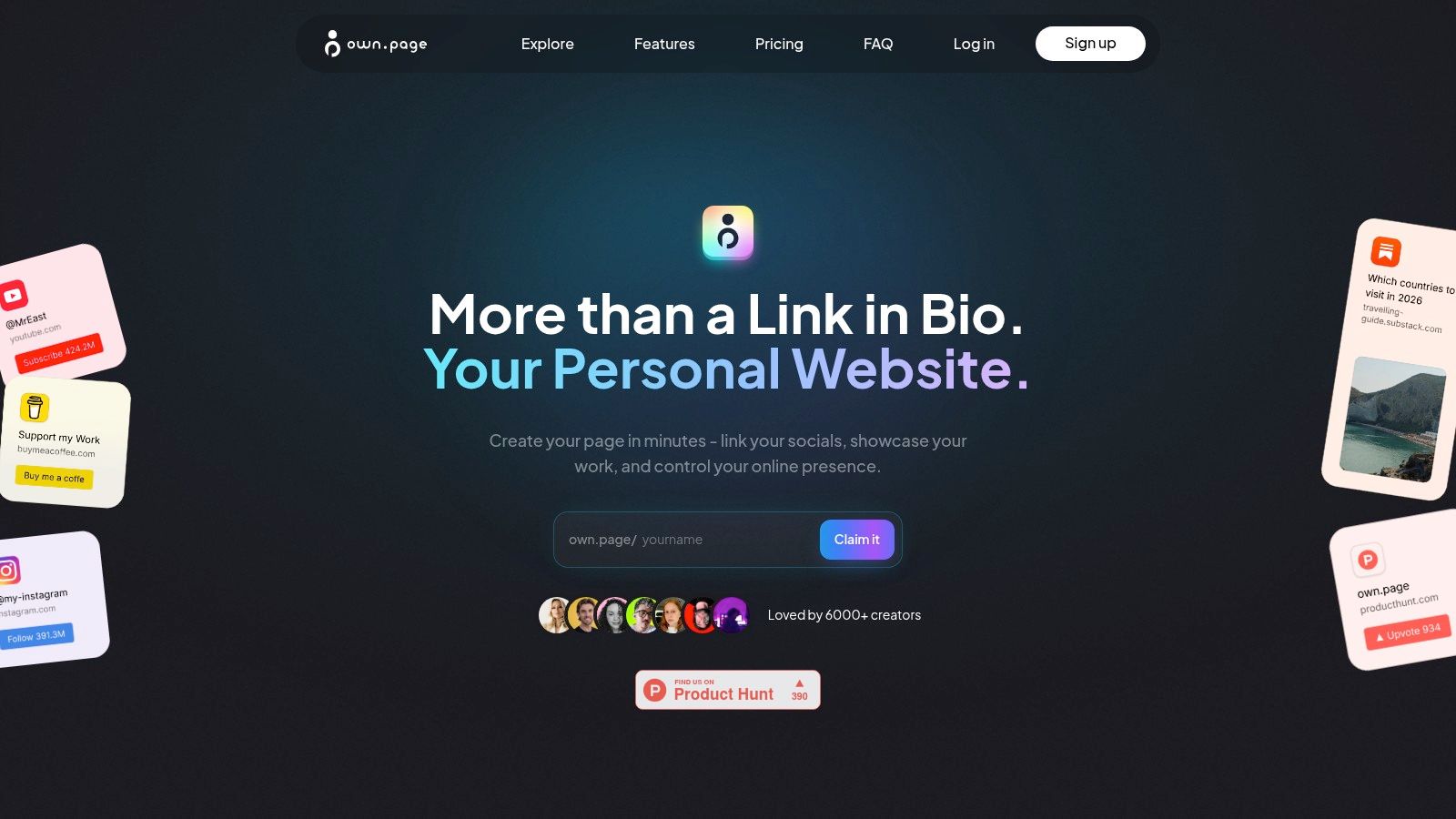
For a lot of musicians, the best website isn't a full website builder first. It's a fast, polished home base that can go live today and evolve later. That's where own.page stands out.
own.page sits in the sweet spot between a plain link list and a full site platform. You can build a branded micro-site quickly, add blocks for text, links, images, video, and embeds, and make it feel like an actual artist homepage instead of a temporary bio link. For musicians releasing singles, booking gigs, pitching press, or sending fans to one central page, that speed matters.
The biggest practical advantage is that it keeps the setup light without making the page feel disposable. You can embed Spotify, YouTube, TikTok, Instagram, forms, calendars, and other widgets, so a fan can listen, watch, click, and sign up from one place.
Why own.page works so well for musicians
Most artists don't need a giant navigation menu on day one. They need a page that answers the fan's next question fast: Where do I listen? When's the next show? Where's the merch? How do I follow or contact you?
own.page is strong at exactly that kind of focused flow.
- Fast launch: You can get a page live quickly without touching code or messing with a heavy editor.
- Media-first layout: Spotify, YouTube, TikTok, Instagram, and other embeds make the page feel like music, not just marketing.
- Mobile editing: If most of your traffic comes from socials and phones, being able to update from your phone matters.
- Useful analytics: Built-in analytics help you see what people click and where traffic is coming from.
Practical rule: If your main job is sending listeners from social posts to one clean destination, a focused micro-site usually beats a bloated website.
There's also a strategic reason tools like this are becoming more useful. Music platform guides increasingly emphasize quick launch, mobile-first setup, streaming embeds, and simple store management because discovery often starts on phones and social platforms, not desktop search, as noted by Bandzoogle's musician website guidance.
Best fit
own.page is best for solo artists, producers, DJs, and emerging bands who want a professional online presence without the overhead of managing a full multi-page build. It's also a strong choice for release campaigns, press pages, and "all roads lead here" artist hubs.
The trade-off is straightforward. If you need a large store, deep content architecture, or a full editorial site, you'll outgrow it. But if you're trying to answer the underlying question behind "best website for musicians," which is usually "what can I launch fast that still looks legit," own.page is one of the smartest starting points.
2. Bandzoogle
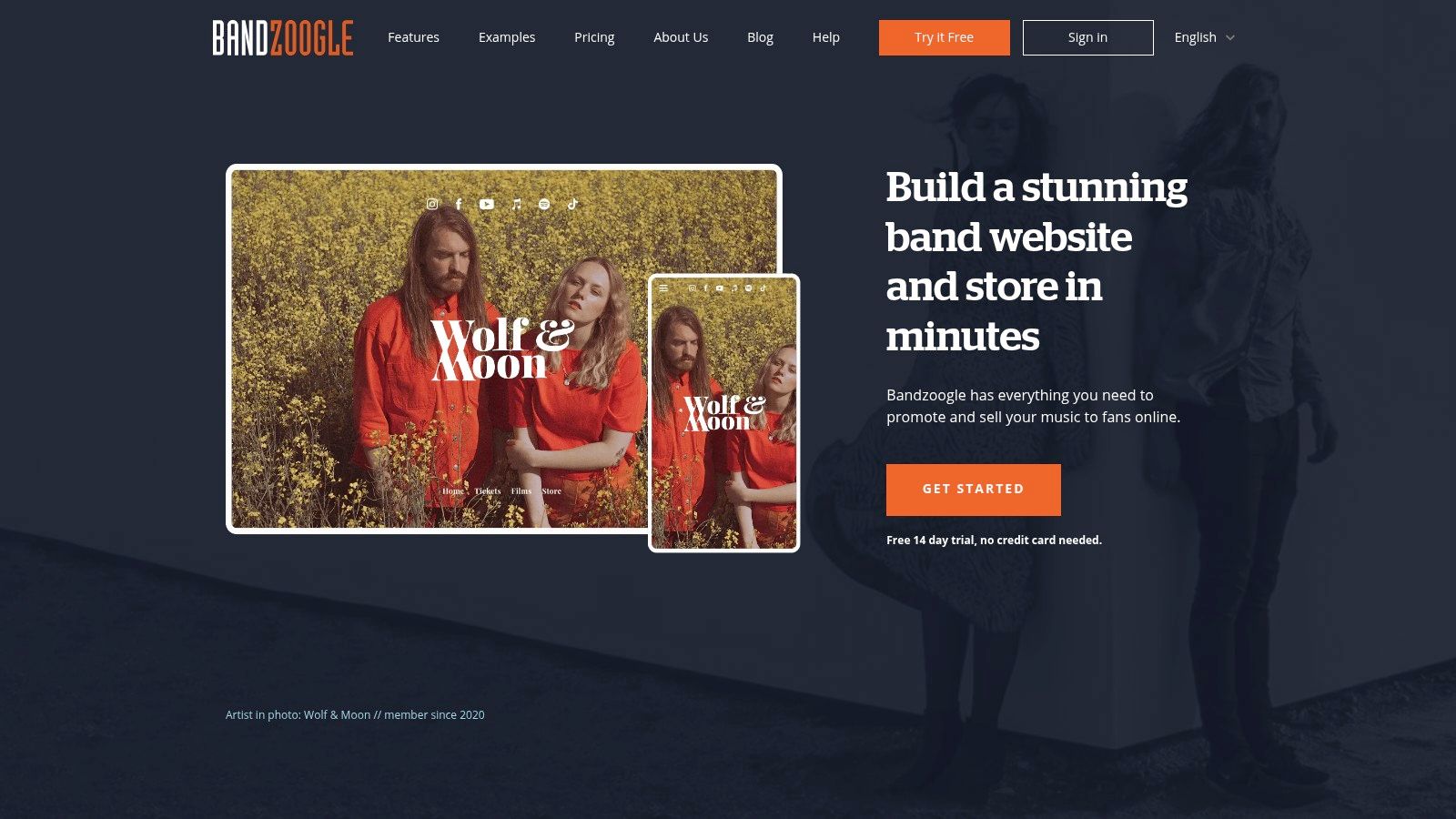
Bandzoogle is what I recommend when an artist already knows they want an all-in-one music hub, not just a homepage. It was built around musician workflows, and that focus shows.
You don't have to force generic website blocks into music use cases. Releases, tour dates, EPK pages, mailing lists, stores, and audio players are already part of the product. That reduces setup friction for bands that need one place to manage multiple moving parts.
Where Bandzoogle is strongest
Bandzoogle is at its best when direct-to-fan sales are part of the plan, not an afterthought. Built-in tools for digital music, merch, tickets, fan subscriptions, and show calendars make it a practical choice for artists who want their site to do actual business.
That lines up with a broader shift in how musician sites are used. Dedicated music websites help artists capture first-party traffic, email signups, ticket interest, and merch intent in one controlled funnel, which is why direct ownership matters so much in the first place, as discussed in this guide to music website builders for musicians.
- Best for bands and active solo artists: Especially useful if you have releases, shows, merch, and press needs happening at the same time.
- Strong built-ins: Site-wide audio players, album pages, EPKs, and stores are already there.
- Cleaner operations: You don't need to stitch together several third-party tools to get a basic music business site working.
Bandzoogle makes the most sense when your website needs to function like a mini label hub, not just a business card.
The downside is design flexibility. You can make good-looking sites with it, but it won't feel as freeform as Wix or Webflow. If visual experimentation matters more than musician-specific features, you may find it a little rigid. If you want a more deliberate framework for deciding between a full website and lighter tools, this guide on how to build an online presence is useful context.
3. Wix with Wix Music
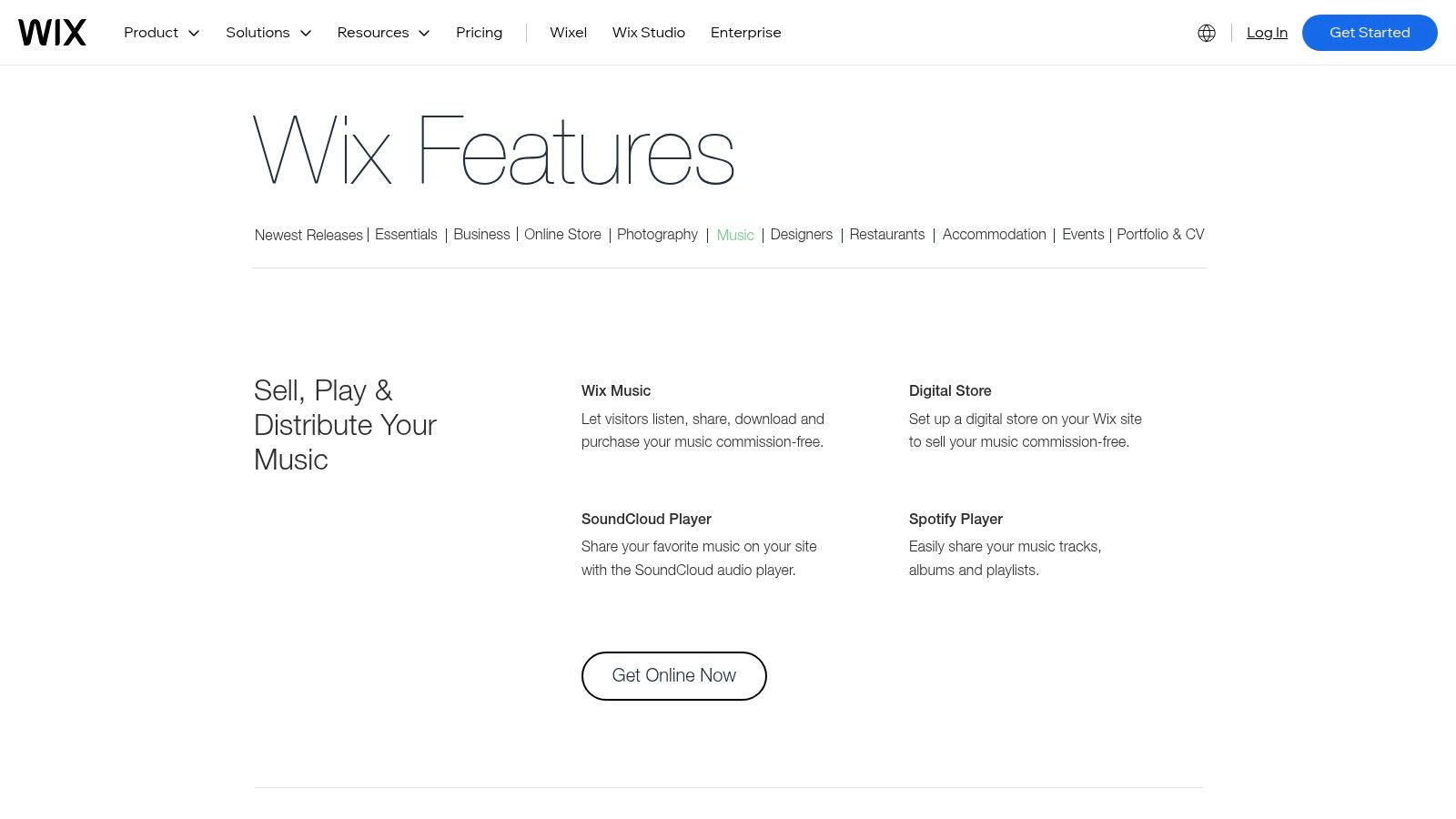
Wix is the flexible generalist in this list. If Bandzoogle is music-first and structured, Wix is visual-first and broad.
That makes Wix Music appealing to musicians who want lots of design options without giving up music-specific tools. You get drag-and-drop editing, a large template library, music players, storefront options, and integrations for tour dates and social activity.
Best use case
Wix works best for artists who care about presentation and want room to shape the site beyond standard music templates. If you're building a site that needs to serve as an artist brand, portfolio, blog, and store at the same time, Wix gives you more freedom than most music-specialized builders.
A few practical strengths stand out:
- Good for beginners: The editor is approachable, and the free plan lets you test the experience.
- Plenty of templates: Helpful if you don't want to start from a blank canvas.
- Music integrations: Built-in support for tracks, social follows, and tour widgets makes it more musician-friendly than a standard site builder.
Wix's trade-off is complexity creep. It's easy to start simple, then end up paying for extra features or spending more time than expected tweaking layouts and add-ons. That's not always bad. It just means Wix rewards people who want control and are willing to manage it.
If you're asking for the best website for musicians and what you really mean is "I want my site to look like my brand, not like a standard band template," Wix belongs on the shortlist.
4. Squarespace
Squarespace is the cleanest choice for musicians who want their site to look polished with minimal effort. If your priorities are visual branding, a strong press kit, and a professional portfolio feel, Squarespace is hard to ignore.
It handles pages, blogs, image-heavy layouts, audio blocks, commerce, and analytics in one tidy system. For singer-songwriters, composers, producers, and artists with strong visuals, the templates often do a lot of the work for you.
Where it shines
Squarespace is strongest when the site needs to feel editorial and curated. That makes it especially good for artist bios, media galleries, embedded video, press pages, and smaller merch setups.
Its practical appeal is simple:
- Strong design out of the box: Templates usually look finished with less tweaking.
- Good all-around stack: You can run a site, basic store, mailing content, and analytics from one place.
- Solid for EPK-style presentation: Press photos, bios, embedded music, and contact details fit naturally.
A polished website often beats a feature-heavy one if you're sending journalists, venues, and collaborators to it.
The trade-off is flexibility after the fact. Template changes can be awkward, and deep customization can push you toward custom CSS or JS. If you're comparing visual-first tools, this breakdown of the best website builder for artists is a useful companion read.
Squarespace isn't the most music-specific option here. It is one of the easiest ways to look established.
5. WordPress.com
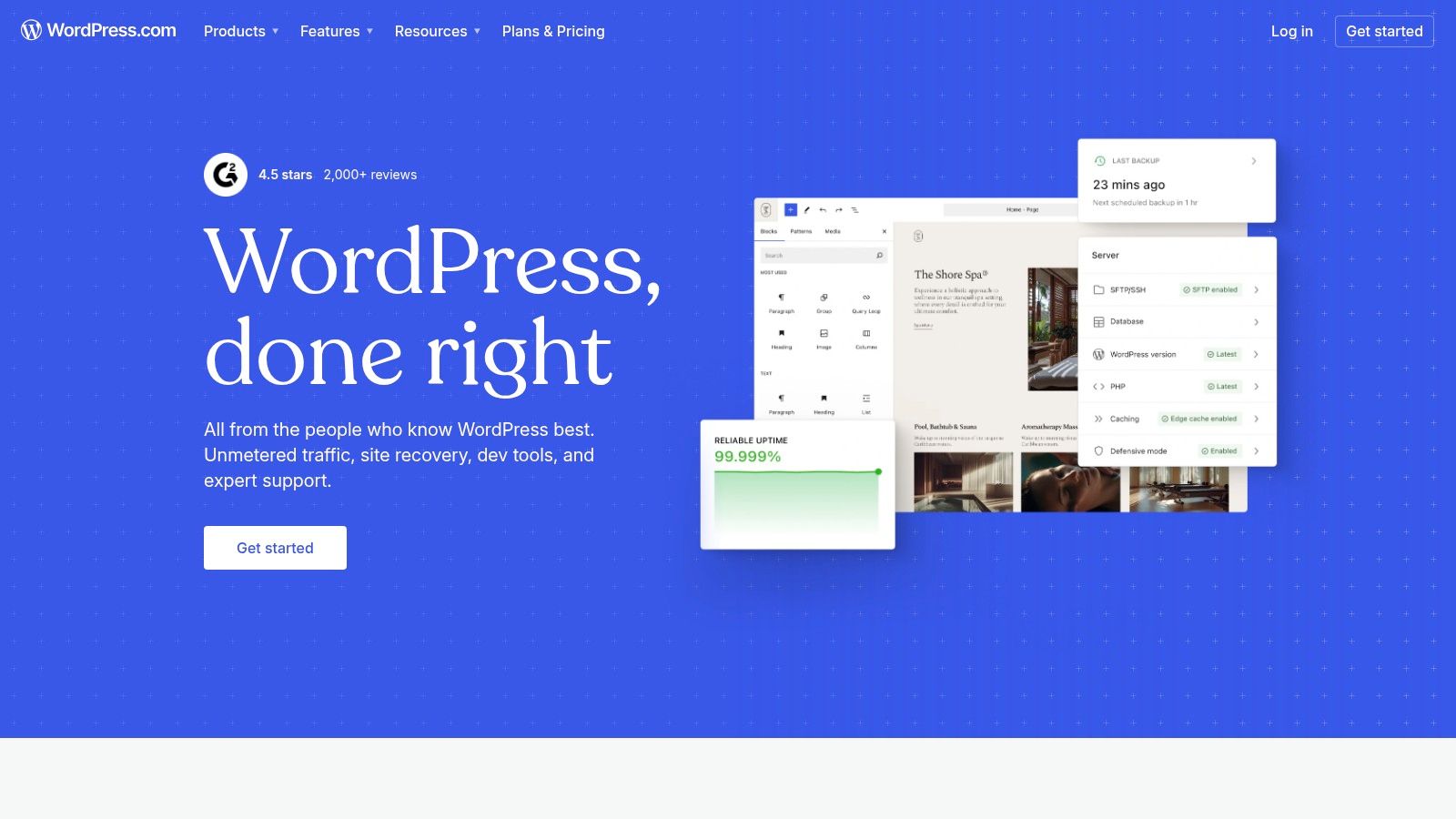
WordPress.com is the "grow into it" option. It isn't the fastest builder on this list, and it isn't the simplest. But if you want a platform that can start as an artist site and expand into a larger content and commerce system, it's a serious contender.
The hosted version removes some of the infrastructure headache that comes with self-hosted WordPress, while still giving you access to the wider WordPress ecosystem on higher tiers. That matters if you expect your needs to change over time.
Who should choose it
Choose WordPress.com if your site is going to carry a lot of content. Blogs, news updates, archives, discographies, event listings, long-form press, and layered navigation are all more comfortable here than on minimalist builders.
This is also where the ownership question becomes important. Many roundups focus on templates and store tools, but artists often miss the bigger issue of portability. Domain control, SEO continuity, and content migration matter when a music site becomes a long-lived brand asset, as highlighted in this overview of website builders for musicians.
- Best for content-heavy artists: Great if you publish often or need a deeper site structure.
- Scales well: Themes and plugin support open up a lot of options on higher plans.
- Less limited long term: Better for artists who don't want to rebuild later.
The downside is effort. WordPress.com asks more from you than Carrd, own.page, or even Squarespace. If you don't want to think about plugins, theme settings, page structure, and occasional maintenance, another option will feel lighter.
6. Webflow
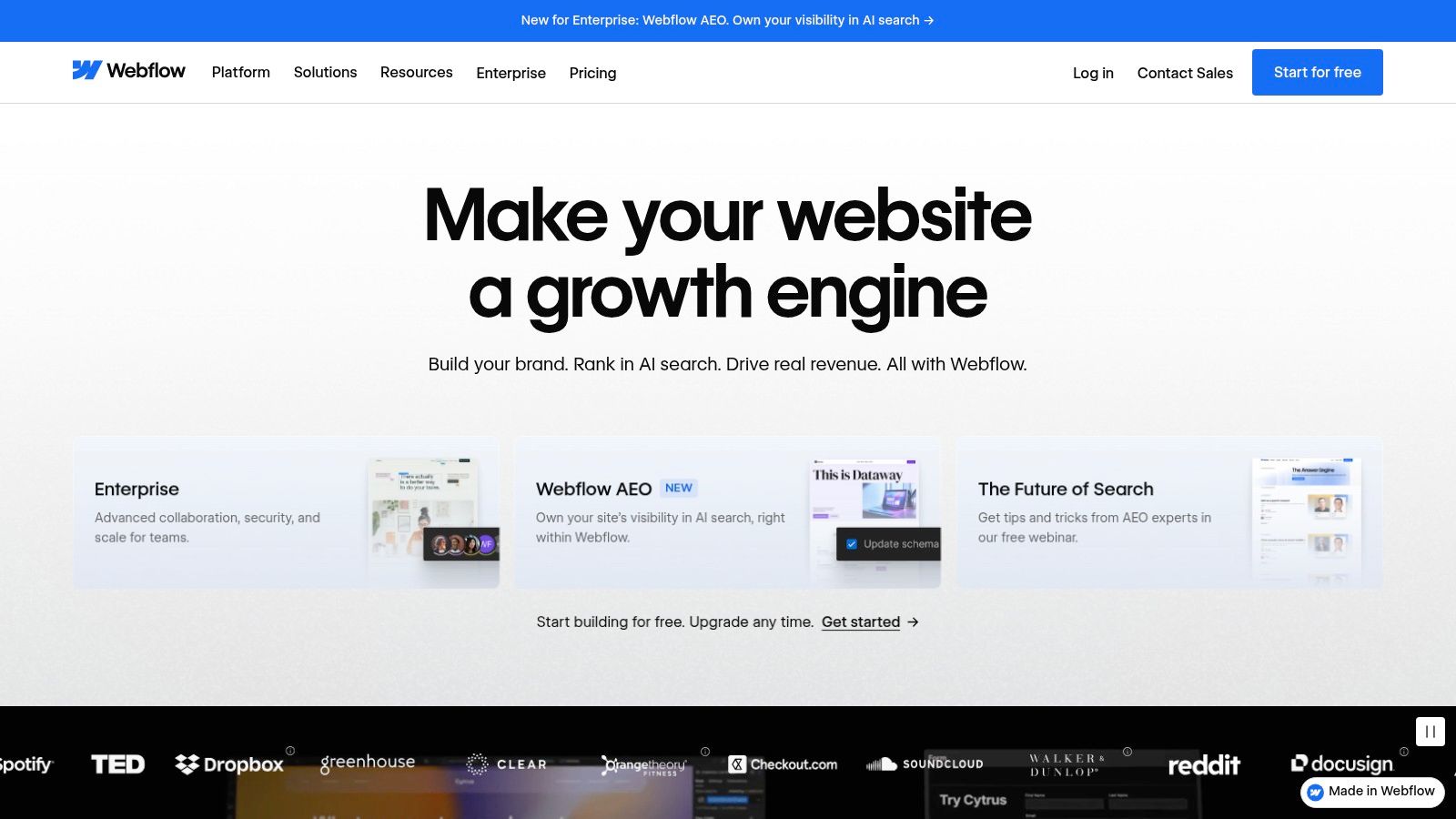
Webflow is for artists who care about custom design enough to tolerate a steeper learning curve. It isn't the easiest answer to "best website for musicians," but in the right hands it can produce the most distinctive result.
A standard artist template can look fine. A well-built Webflow site can look like an intentional digital identity. That's why agencies, designers, labels, and visually driven artists keep using it.
When Webflow makes sense
Webflow works best when your site needs structure and style at the same time. Discographies, press archives, campaign pages, embedded media, and custom layouts all fit well inside its CMS-driven model.
It also suits artists who want a bespoke site without going fully custom-coded.
- Excellent design freedom: You can create layouts that don't feel like they came from a marketplace template.
- Strong CMS: Useful for repeatable content like releases, videos, tour stops, and press coverage.
- Professional finish: Strong choice for agencies or artist teams building something more ambitious.
Webflow is overkill for a simple artist homepage. It's the right tool when the website itself is part of the brand experience.
The trade-off is obvious. Webflow takes time to learn, and plan choices can be confusing. If you're managing everything solo and just need a reliable music hub, simpler platforms will get you live faster.
7. Carrd
Carrd solves a very specific problem. You need a clean page, you need it live fast, and you don't need a full website pretending to be useful.
That's why Carrd remains such a good option for pre-save pages, release one-pagers, mini EPKs, simple homepage links, and short campaign sites. Its one-page structure keeps the focus narrow.
The smart way to use Carrd
Carrd is strongest when you use it intentionally, not as a watered-down website replacement. A release page with embedded music, one clear CTA, social links, a mailing list form, and a short bio can work very well. A sprawling artist site forced into one long page usually doesn't.
A few situations where Carrd fits:
- Single-release campaigns: One song, one CTA, one visual direction.
- Simple press pages: Bio, photos, music embed, contact details.
- Temporary campaign sites: Tour announcement, pre-save push, festival application page.
The limitation is built into the product. Carrd isn't meant for complex multi-page structures, stores, or heavy content libraries. That's fine. It wins by being focused, affordable, and easy to manage.
For musicians who know they don't need a full builder yet, Carrd is one of the cleanest lightweight choices available.
8. Beacons
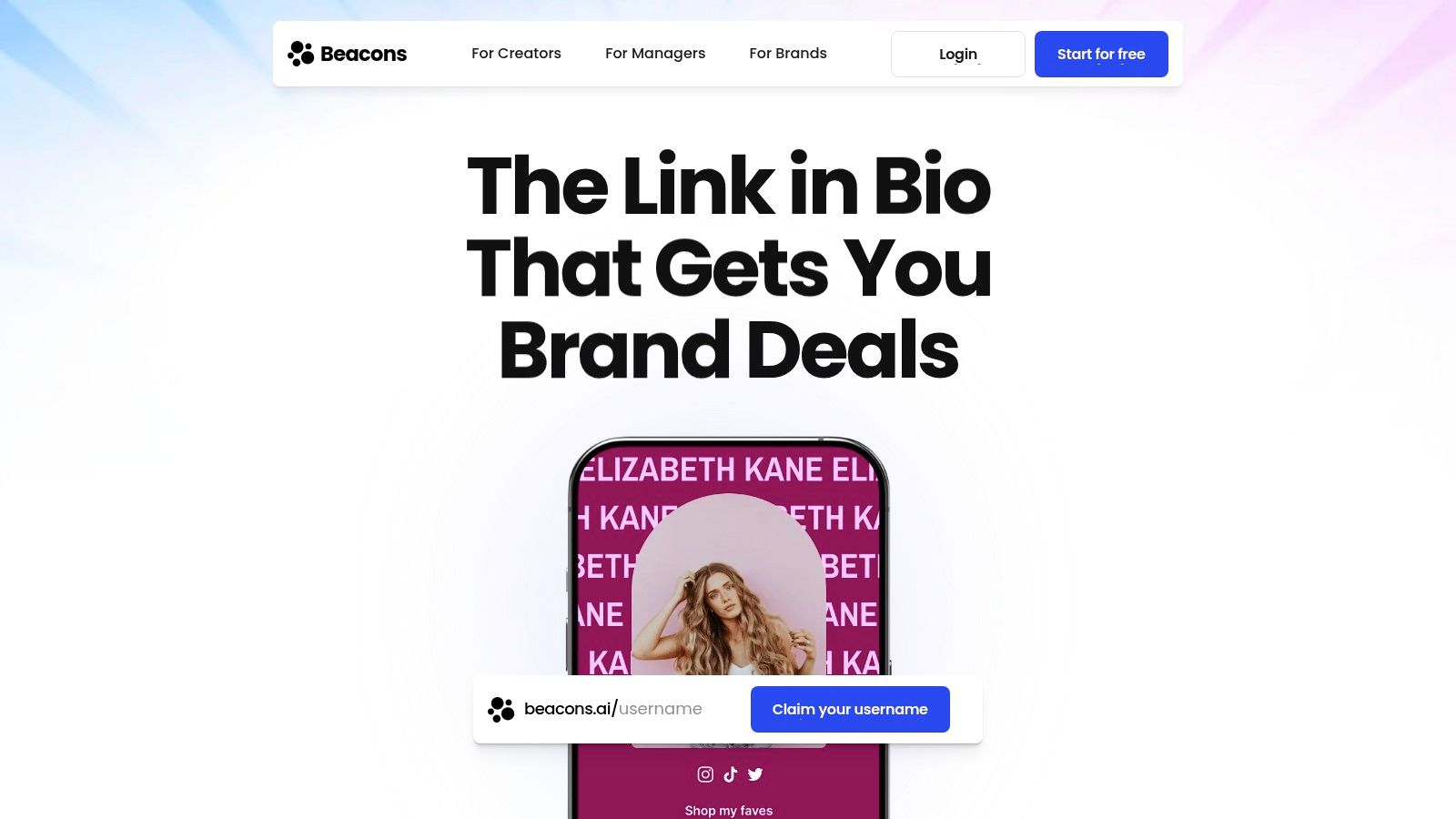
Beacons sits closer to the creator economy than the traditional music website world, and that's exactly why some musicians will prefer it. If your audience comes mostly through social content, Beacons can feel more aligned with how you already work.
It combines a link hub with creator-style monetization and fan management tools. That can be useful if your music business runs through content, memberships, direct offers, and fast mobile updates.
Where Beacons beats a traditional site
Beacons works well for artists who think like creators as much as musicians. If you're constantly posting clips, collecting leads, selling digital products, or managing fan interactions from your phone, the platform's built-in store and automation features are attractive.
This also ties into a larger question many artists are asking now. A full website isn't always the best central hub for every stage of a career. In some cases, a lightweight mobile-first presence can be the smarter conversion layer between social discovery and deeper engagement, a trade-off raised in this discussion about YouTube and modern discovery behavior.
- Good for social-first musicians: Especially useful if Instagram, TikTok, or YouTube drives most of your traffic.
- Built for fast updates: Mobile app support is a real advantage for on-the-go artists.
- More monetization than a basic bio page: Useful if you're selling beyond just merch.
The downside is positioning. Beacons can feel less like a full artist website and more like a monetized creator hub. That can be a strength or a mismatch, depending on what you want fans and industry contacts to see.
9. Linktree
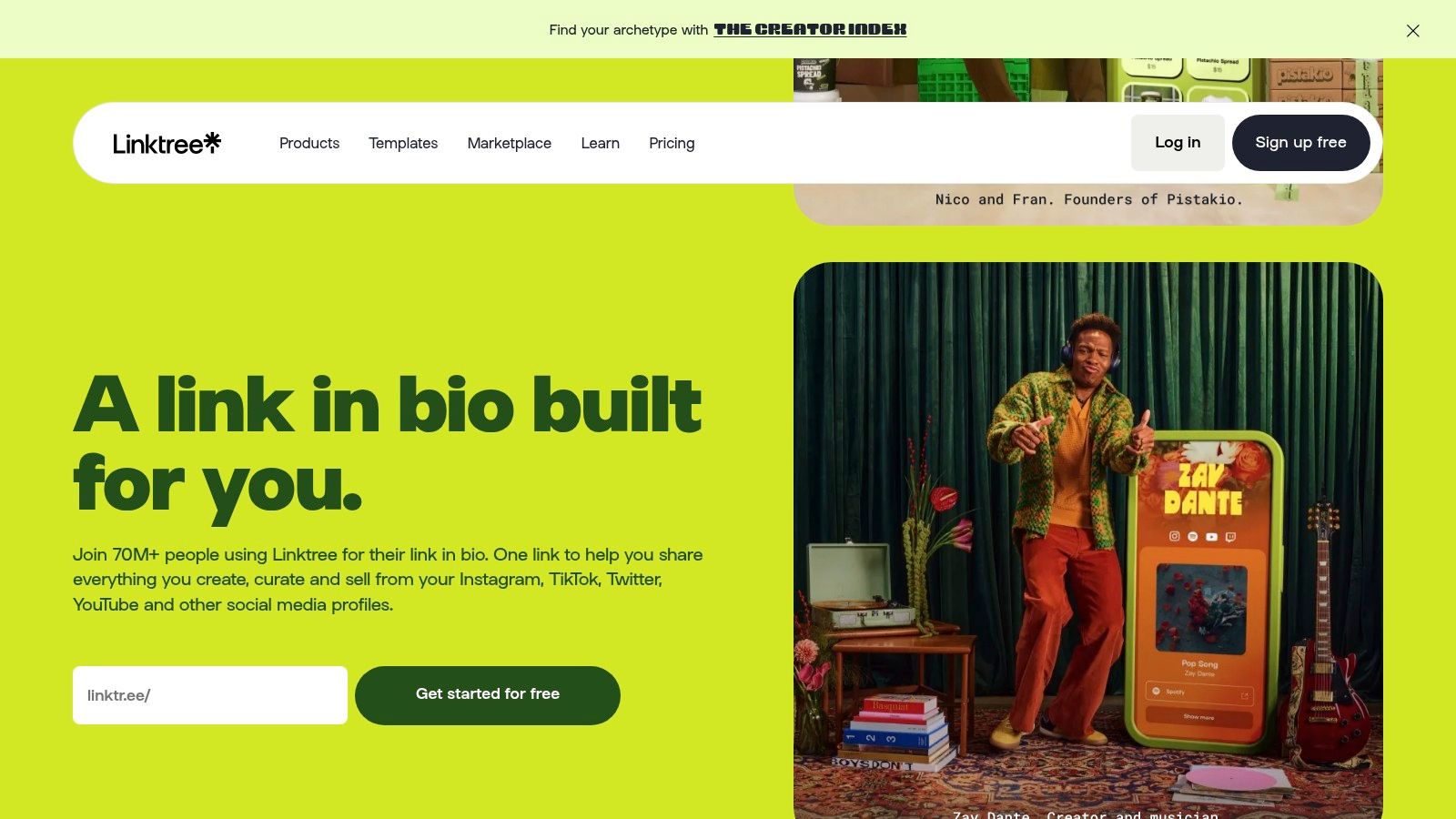
Linktree is the default answer for a reason. It's familiar, fast, and easy to explain. Send people to one page with your stream links, ticket links, merch links, and socials, and you're done.
For some musicians, that simplicity is enough. For others, it's exactly the problem.
What it does well
Linktree is still useful when speed matters more than branding depth. If you need a quick launch page for a release, a touring link hub, or a simple social bio destination, it gets the job done with very little setup.
Its strengths are practical:
- Very fast to publish: Little friction between signup and live page.
- Widely understood: Fans already know how to use it.
- Expanding feature set: Better monetization and analytics than many people assume.
The main weakness is the experience. A stacked list of links often fragments attention instead of guiding it. That's why many artists eventually move from Linktree to something more branded and media-rich. If you're comparing options in that category, this roundup of best Linktree alternatives is worth reviewing.
Linktree is fine as a utility. It rarely feels like a real artist home.
10. Music Glue
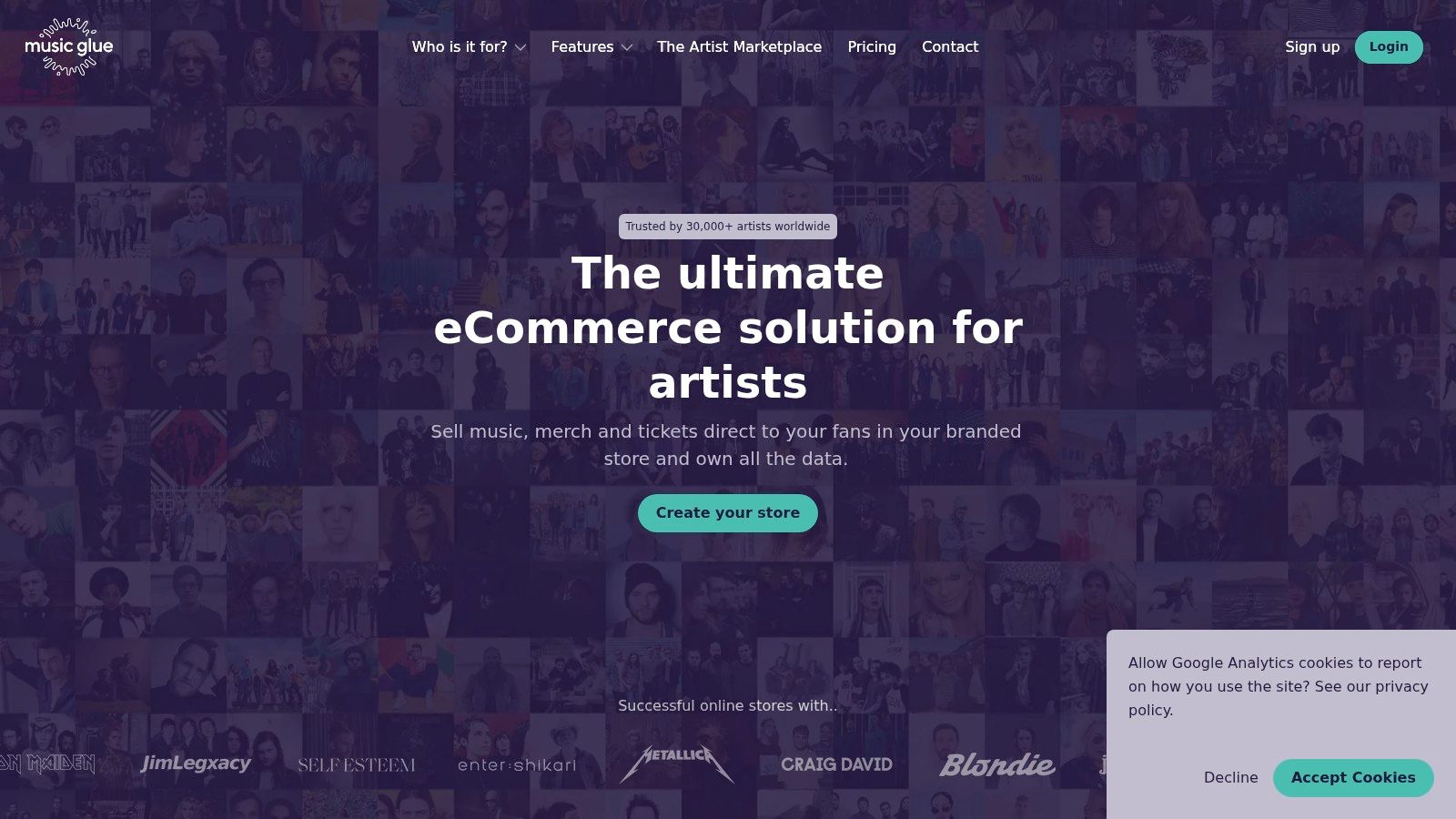
Music Glue is the strongest pick here for artists who think commerce first. If your site needs to move merch, tickets, bundles, pre-orders, and direct fan purchases in a serious way, Music Glue deserves attention.
It feels less like a design-led website builder and more like a direct-to-fan sales system with website functionality attached. For the right artist, that's exactly the right emphasis.
Best for direct-to-fan commerce
Music Glue is a strong fit for touring acts, established independents, and artist teams running campaigns where selling is central. Stores, ticketing, bundles, fan data capture, vouchers, and multi-currency support make it more operationally useful than many prettier builders.
That focus changes the type of site you get. Instead of asking whether the homepage feels especially bespoke, the better question is whether the platform supports how you sell.
- Best for merch and ticketing: Strong if direct revenue runs through the site.
- Useful for bigger campaigns: Especially when bundles and pre-orders matter.
- More commerce-led than portfolio-led: Better for selling than showcasing.
The compromise is design freedom. Music Glue won't be the top choice for artists chasing a custom editorial feel. It is the better choice for artists who want the website to work like a business tool.
Top 10 Website Platforms for Musicians: Comparison
| Product | Core features | UX & Quality (★) | Value & Pricing (💰) | Target audience (👥) | Standout (✨ / 🏆) |
|---|---|---|---|---|---|
| own.page 🏆 | Drag‑&‑drop blocks + rich widgets (YouTube, Spotify, TikTok, IG, GitHub, Calendly) | ★★★★☆, fast, mobile-first, polished | Free starter (yourname.own.page); Pro $79.90/yr 💰 | 👥 Creators, freelancers, musicians, small businesses | ✨ Multi-page micro-sites, built-in analytics, remove branding on Pro 🏆 |
| Bandzoogle | Music-first builder: EPKs, site audio, merch & ticket store | ★★★★☆, musician workflows focused | Paid plans; 14‑day trial 💰 | 👥 Musicians & bands needing direct-to-fan sales | ✨ No sales commission, built-in tour/EPK tools |
| Wix (with Wix Music) | Drag‑and‑drop editor + music toolkit & app market | ★★★★☆, design variety, beginner friendly | Free plan; premium tiers add costs 💰 | 👥 Beginners, indie artists wanting templates | ✨ Large template library + Wix Music storefront |
| Squarespace | Design-led templates, native audio, commerce & analytics | ★★★★☆, elegant templates, strong branding | Trial then subscription plans 💰 | 👥 Visual artists, portfolios, EPKs | ✨ Polished templates and integrated commerce |
| WordPress.com | Hosted WP with themes, blocks; plugins on higher tiers | ★★★★☆, scalable, extensible | Free → paid tiers for plugins/commerce 💰 | 👥 Bloggers, artists needing scale & plugins | ✨ Plugin ecosystem + WordPress scalability |
| Webflow | Visual designer + CMS, exportable code, rich embeds | ★★★★★, pro-level design control | Paid plans; costs grow with needs 💰 | 👥 Designers, agencies, bespoke artist sites | ✨ Pixel-perfect layouts & CMS for discographies |
| Carrd | Fast one-page builder with simple embeds & forms | ★★★★☆, minimal, ultra-fast | Very low-cost Pro plans 💰 | 👥 Creators needing single-page EPKs/landing pages | ✨ Extremely affordable, quick launches |
| Beacons | Link-in-bio + creator store, memberships, mobile apps | ★★★★☆, creator-centric mobile UX | Free + paid tiers; some fees on lower plans 💰 | 👥 Social-first creators monetizing directly | ✨ Built-in commerce, CRM-style tools & apps |
| Linktree | Link hub with embeds, scheduling, digital sales on paid tiers | ★★★☆☆, ubiquitous, simple UX | Free + paid; top tier removes seller fees 💰 | 👥 Social-first creators wanting quick bio hub | ✨ Very familiar link-in-bio; growing monetization |
| Music Glue | Direct-to-fan commerce, ticketing, multi-currency support | ★★★★☆, commerce-led, tour-ready | Commissioned plans; scalable for touring acts 💰 | 👥 Touring artists needing ticketing & D2C sales | ✨ Integrated ticketing, bundles & multi-currency |
Your Next Encore Building Your Digital Stage
The best website for musicians depends less on hype and more on job fit. That's the mistake most comparison posts make. They treat every artist like they need the same kind of site, when in practice a touring band, a producer, a singer-songwriter, and a creator-led artist often need completely different online setups.
If you're selling merch, tickets, and music directly from one hub, Bandzoogle and Music Glue make a strong case. If visual branding is the priority and you want your site to feel polished without much effort, Squarespace is a very safe choice. If you want broad flexibility and don't mind more setup, Wix gives you room to shape the experience. If you're thinking long term and expect the site to grow into a larger content platform, WordPress.com is the more scalable bet. If design precision is paramount, Webflow is the pro option.
But many musicians don't need to start there.
They need a controlled, branded place they can launch now. A place to send people from Instagram, TikTok, YouTube, streaming profiles, email signatures, and QR codes on posters. A place that can hold a song embed, a video, show dates, a merch link, a mailing list form, and a contact button without turning into a project that never gets finished.
That's why lightweight tools deserve more respect in this conversation. Carrd, Beacons, and Linktree each solve part of that problem, but they do it in very different ways. Carrd is clean and minimal. Beacons is stronger for creator-style monetization and mobile workflows. Linktree is quick and familiar, but often too generic if you care about brand presentation.
For many artists, own.page is the strongest first move because it gives you more personality than a plain bio link and less overhead than a full builder. You can launch quickly, present your music in a richer way, and keep the experience focused on what fans should do next. That's often the difference between a page that just exists and a page that effectively helps your career.
A musician website should do more than look presentable. It should help you own your audience touchpoints, keep your brand consistent, and make it easier for people to listen, follow, buy, or reach out. If you're also planning merch, this effective online merchandise program guide is a useful next read.
Start with the smallest tool that does the whole job well. You can always expand later. What usually hurts artists isn't starting too small. It's choosing something too heavy, then leaving it half-finished while the social links keep doing all the work.
If you want a fast, flexible home base for your music, own.page is a strong place to start. Claim your name, build a media-rich artist page in minutes, and give fans one clean destination for your songs, videos, merch, and contact links without getting buried in a complex website setup.
Free tools · no sign-up