7 Musician Website Examples: Build Your Site in 2026
 Elitza Vasileva

Your music is on Spotify, your videos are on YouTube, your tour dates are on Bandsintown, and your community is on Instagram. But when a new fan, promoter, or journalist asks for your link, where do you send them? If the answer is “it depends,” your online presence is doing extra work and still losing attention.
A strong musician website fixes that. It gives people one place to listen, watch, follow, buy, and understand who you are. It also gives you more control over branding, release timing, and what action a visitor should take next.
That matters because having a dedicated site has already become standard practice for working artists. Wix reports that 77% of musicians already have their own website, which tells you this isn't a nice-to-have anymore. It's the baseline.
The good news is that musician website examples are useful only if you look past the visuals and study the structure. Some artists need a fast mobile hub. Others need a full merch-driven site, a press-ready EPK, or a CMS-powered archive. Below, I'm breaking down seven tools through that lens, then showing how to borrow the parts that work effectively, especially if you want to build quickly with own.page.
Table of Contents
- 1. own.page - Musician-first Mini-Site
- 2. Bandzoogle
- 3. Squarespace
- 4. Wix (Wix Music)
- 5. Shopify
- 6. WordPress.com (Hosted) with Music Themes
- 7. Webflow
- 7 Musician Website Platforms Compared
- From Example to Execution Build Your Stage
1. own.page - Musician-first Mini-Site
If most of your traffic comes from social, text messages, DMs, and mobile taps, own.page is one of the cleanest ways to build a musician hub without overbuilding. It sits in the sweet spot between a link-in-bio page and a small website, which is exactly where many artists need to be.
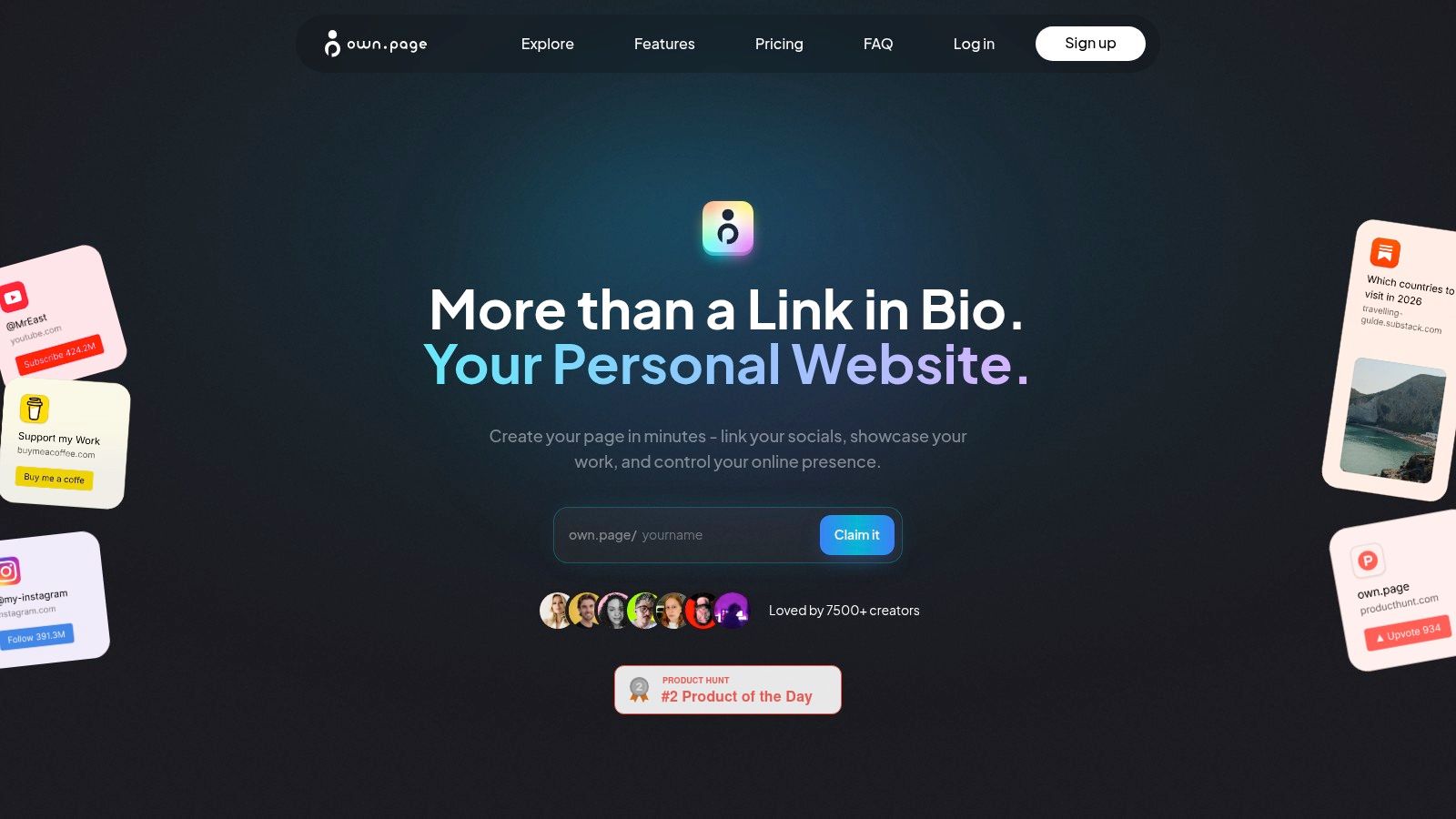
The practical advantage is speed. You can launch from your phone or browser, add embeds for Spotify, YouTube, TikTok, Instagram, and calendars, then put every important action in one mobile-friendly flow. For a release week, a show announcement, or a merch push, that simplicity often beats a bigger site that takes too long to update.
Why own.page works for musicians
Most musician website examples show polished desktop layouts, but fans usually meet your brand through a phone screen first. own.page is built around that behavior. Instead of sending people out to five platforms, you can stack media, links, and action blocks in the order that supports your goal.
It also helps with the strategic question many artists get stuck on: should you build a full homepage or a lighter hub first? That's where own.page is especially useful. You can start with a focused mini-site now, then expand later if you need multi-page structure, a custom domain, or more advanced customization through Pro. If you're weighing those options, this guide on the best website for musicians is a useful companion.
Practical rule: If your audience mostly discovers you through social platforms, build the fastest page that lets them listen, watch, and take one clear next step.
Another strong point is analytics. own.page includes built-in tracking for traffic sources, page views, and clicks, so you're not guessing which button or embed pulls attention. That's valuable for musicians because small layout decisions matter. A “Listen Now” block near the top often outperforms a buried streaming link, and a visible calendar can outperform a generic “Shows” button.
How to build a strong own.page musician setup
A musician page on own.page works best when it follows a tight sequence. Don't treat it like a random pile of links.
- Lead with the current priority: Put your latest single, video, ticket link, or preorder first. Fans shouldn't have to scroll to find what you're promoting.
- Use media before biography: A Spotify player, YouTube embed, or short visual block usually earns more attention than a long artist intro.
- Group actions by intent: Keep listening links together, social links together, and commerce actions together so the page feels organized.
- Add one trust signal: Use a short bio line, press mention, venue mention, or collaboration reference to give new visitors context quickly.
Crazy Egg's analysis of standout artist sites points to features that go beyond the basics, including lyrics, photo diaries, and interactive experiences on musician websites. own.page gives you a practical way to borrow that thinking without needing a custom build. You can replicate the same underlying strategy by embedding media, posting visual updates, and creating a page that feels active instead of static.
What doesn't work is trying to turn a mini-site into a bloated full portal on day one. If you cram in every platform, every old release, and every side project, the page loses focus. own.page is strongest when it acts like a conversion hub. One release, one campaign, one clear story.
2. Bandzoogle
Bandzoogle is one of the few builders that feels like it was designed by people who understand what working musicians need day to day. Not “creative professionals” in the broad sense. Musicians specifically.
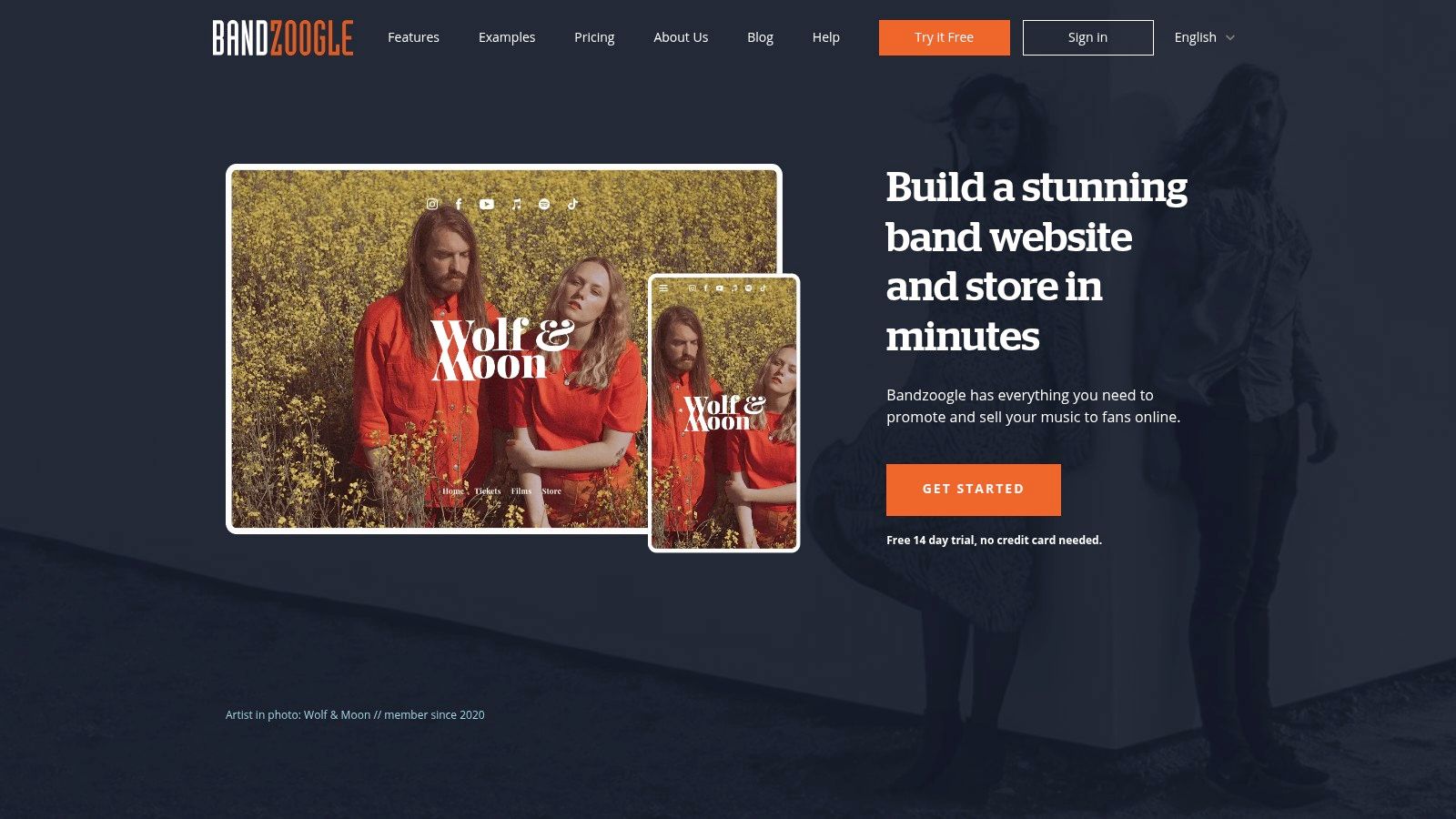
Its value is the native stack. You get music players, mailing list tools, tour calendars, EPK options, and a store for digital and physical products without stitching together a lot of outside services. For artists who want one login and one system, that's a real operational advantage.
Where Bandzoogle is strongest
Bandzoogle shines when your site has to do actual music-business work. If you need a homepage, a press kit, a merch section, and event information in one place, it gives you that structure out of the box.
That makes it especially useful for independent artists who are booking gigs, pitching press, and selling direct at the same time. If your current setup is a social profile plus a payment link plus a PDF EPK in Google Drive, Bandzoogle will feel much cleaner.
A musician site should help with booking and revenue, not just look presentable.
The trade-off is creative freedom. You can build a professional site quickly, but the design language is more template-driven than a visual tool with looser layout control. That's not always bad. In practice, a lot of musicians benefit from constraints because it stops them from spending weeks polishing instead of publishing.
What to copy from Bandzoogle-style sites
If you're not using Bandzoogle itself, the structure is still worth copying.
- Put your EPK within easy reach: Promoters and media contacts shouldn't have to hunt for bios, photos, and contact details.
- Treat merch as part of the main journey: Don't hide store links in the footer. Put them in navigation or on the homepage.
- Keep event info current: Dead tour pages make a site look abandoned faster than almost anything else.
If you want some of that simplicity without committing to a fully musician-specific platform, a drag-and-drop website builder can cover the same core needs for a lighter setup. The main lesson from Bandzoogle isn't “use every built-in feature.” It's “make the business side easy to maintain.”
3. Squarespace
Squarespace is what many artists choose when they prioritize presentation and want a site that looks polished without hiring a designer. That's a fair reason to pick it. A lot of musician website examples built on Squarespace feel composed, editorial, and brand-aware from day one.
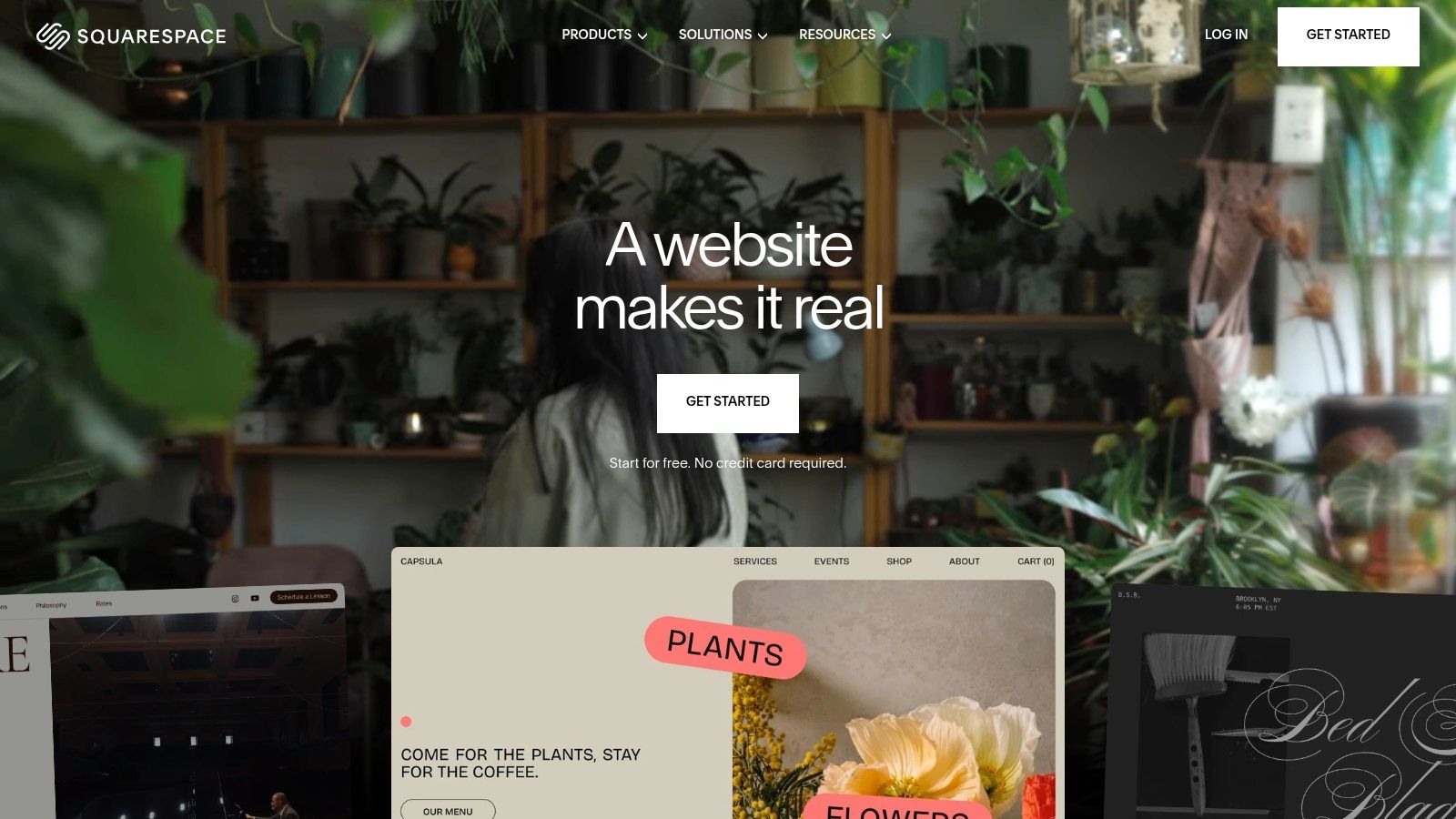
Its templates generally do a good job with typography, spacing, image treatment, and mobile responsiveness. If your visual identity matters as much as your release schedule, that matters.
Where Squarespace earns its reputation
Squarespace works best for artists who want one platform for site design, content, commerce, newsletters, and basic analytics. It gives you a managed environment, which means fewer setup headaches than a more open-ended system.
It also suits musicians who care about mood and storytelling. A sparse homepage, strong photos, a featured release, and a concise events section can look excellent on Squarespace with relatively little effort. For solo artists, composers, and genre projects with a strong visual world, that can be enough.
Benchmark guidance from InClassics points out that effective musician websites often include core pages like Home, About, Events, and Media, with direct streaming links and rich media playing a central role. Squarespace makes that architecture easy to build cleanly.
What tends to go wrong
The most common mistake on Squarespace is overvaluing aesthetics and undervaluing action. Artists spend time choosing fonts and image crops, then bury the “Listen,” “Tickets,” or “Join Mailing List” path.
- Don't let the hero section become a poster only: Give visitors a button or player immediately.
- Don't scatter commerce: If you sell merch or digital products, make the route obvious.
- Don't assume beautiful means strategic: A page can look premium and still fail to direct attention.
If your main challenge is deciding between style-heavy templates and a simpler creator hub, this breakdown of the best website builder for artists helps clarify the trade-offs. Squarespace is often a good fit. It just rewards restraint more than maximalism.
4. Wix (Wix Music)
Wix has range. That's its biggest strength and, for some users, its biggest problem. If you want lots of templates, flexible editing, and music-specific tools without moving into custom development, Wix stays in the conversation for good reason.
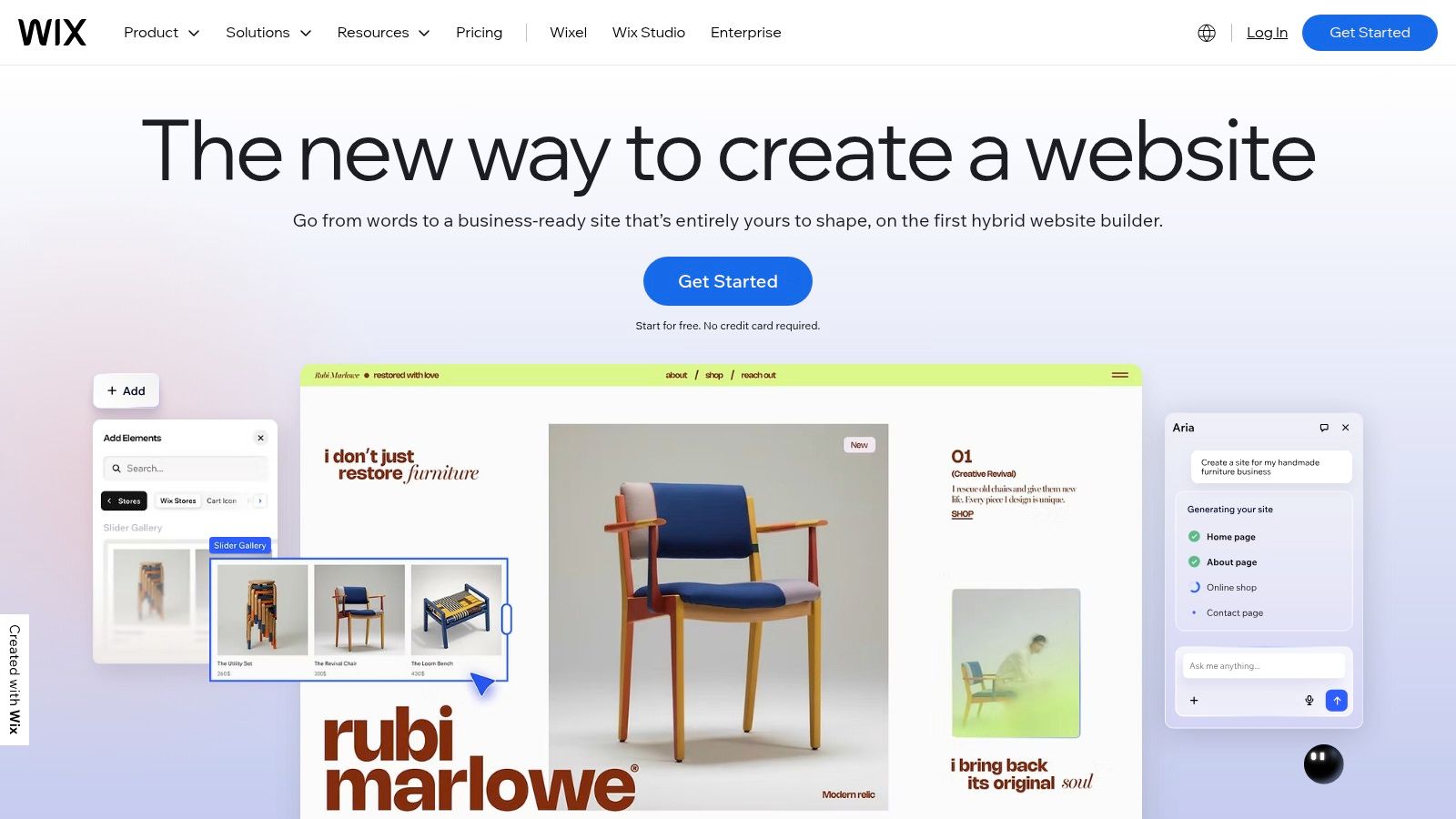
For musicians, the appeal is obvious. You can embed media, show tour dates, build a branded homepage, and use a large template library as a starting point. If you like seeing examples before you build, Wix makes that easy.
What Wix gets right
Wix is useful for artists who want flexibility without learning a more advanced design system. You can move fast, especially if you're willing to start from a music template instead of customizing every inch.
It also helps that Wix has paid attention to the music category directly. Their guidance for bands and artists treats a website as more than a gallery. It's framed as a working hub for releases, shows, contact, and fan engagement. That aligns with how most serious musicians use their site in practice.
A separate musician website case study from Fred & Augustus showed that a rebuilt artist site increased overall traffic by 240% and organic search traffic by 128%. The lesson isn't that every Wix site will do the same. It's that architecture and SEO matter a lot more than many artists assume.
Best fit for Wix
Wix makes sense when you want a fuller website than a mini-site, but don't want to deal with a steeper learning curve. It's especially useful for bands, tribute acts, local performers, and artists who need multiple sections fast.
The caution is platform clutter. Wix gives you enough freedom to make a messy site if you keep adding apps, sections, and visual effects without a hierarchy.
Put the current release, upcoming shows, and primary contact path above everything else. Most visitors won't explore your entire site.
The best Wix musician website examples usually aren't the busiest ones. They're the clearest ones.
5. Shopify
Some artists don't need a media-first website. They need a store that can handle real volume, product variations, shipping logic, bundles, and preorder workflows. That's where Shopify earns its place.
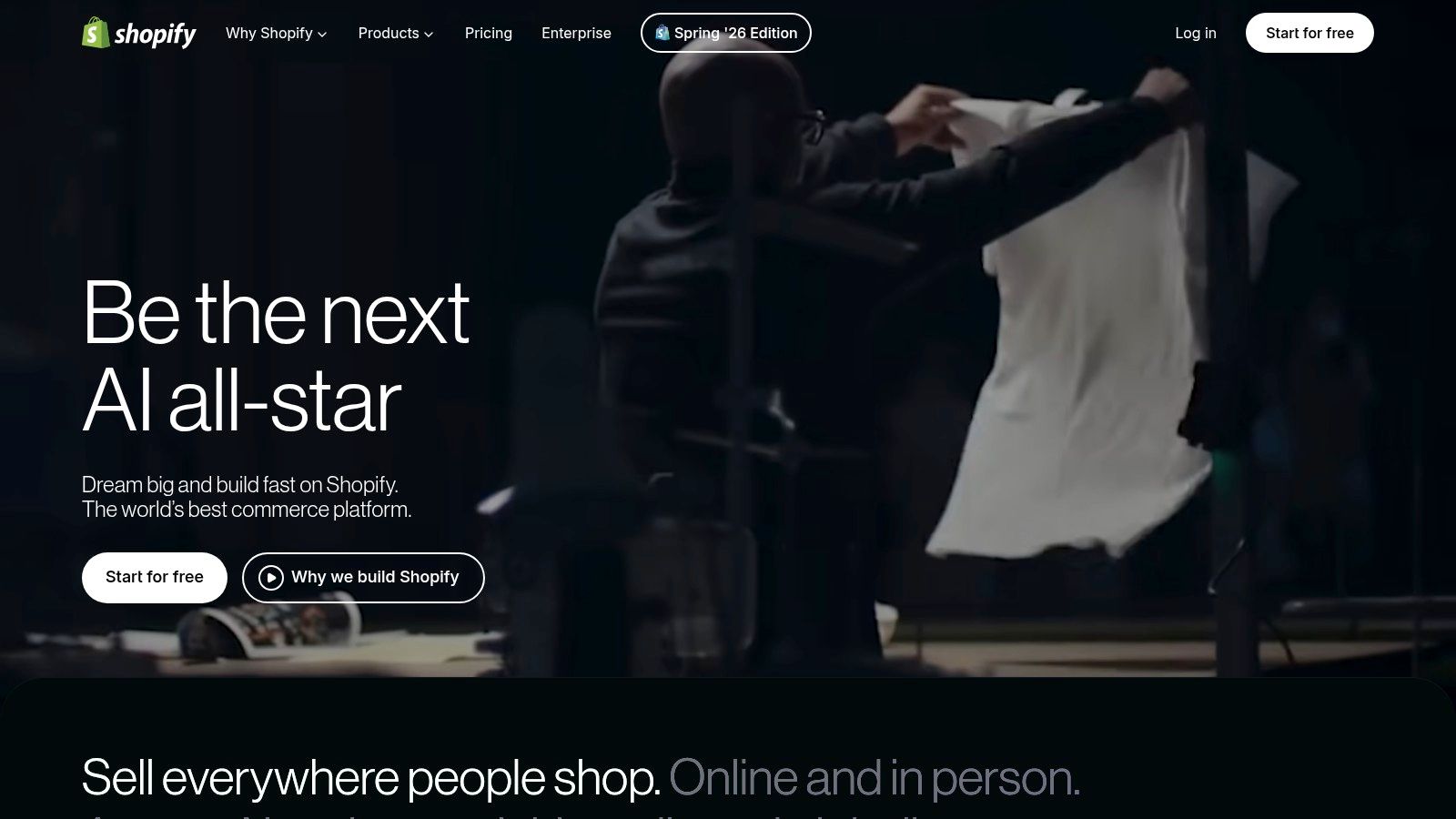
If merch is a serious revenue channel for you, a general website builder can start to feel limiting. Shopify is store-first, and that focus matters once your catalog gets more complicated than a few shirts and a digital download.
When store-first is the right move
Shopify is a strong choice for artists selling apparel, vinyl, bundles, collectibles, tour items, and limited drops. It handles inventory and checkout with much more depth than most site builders aimed at creators.
That matters because monetization is often the missing piece in musician website examples. A lot of inspiration galleries show visually strong sites but skip the mechanics of how fans buy. The underserved angle in the research makes that gap clear: many guides focus on style while ignoring direct payment flow, ticketing, and revenue tracking. If selling is central to your strategy, Shopify is often a better core platform than a design-led builder.
What to borrow from Shopify-powered artist sites
Even if Shopify feels too commerce-heavy for your current stage, there are structural ideas worth stealing.
- Build around product intent: If a visitor lands during a release or merch drop, show the collection immediately.
- Use bundles and collections wisely: Fans don't want to click across disconnected product pages to understand an offer.
- Keep media close to products: A song snippet, video, or album context near the purchase path helps connect merch to the release story.
What doesn't work is forcing Shopify to be your only expression layer if your brand depends on editorial content, press pages, or rich artist storytelling. In those cases, many musicians pair a lean content hub with a stronger store experience. That's often the better split.
6. WordPress.com (Hosted) with Music Themes
WordPress.com sits in an interesting middle ground. It gives you more flexibility than the most locked-down builders, but without asking you to self-host and manage everything yourself.
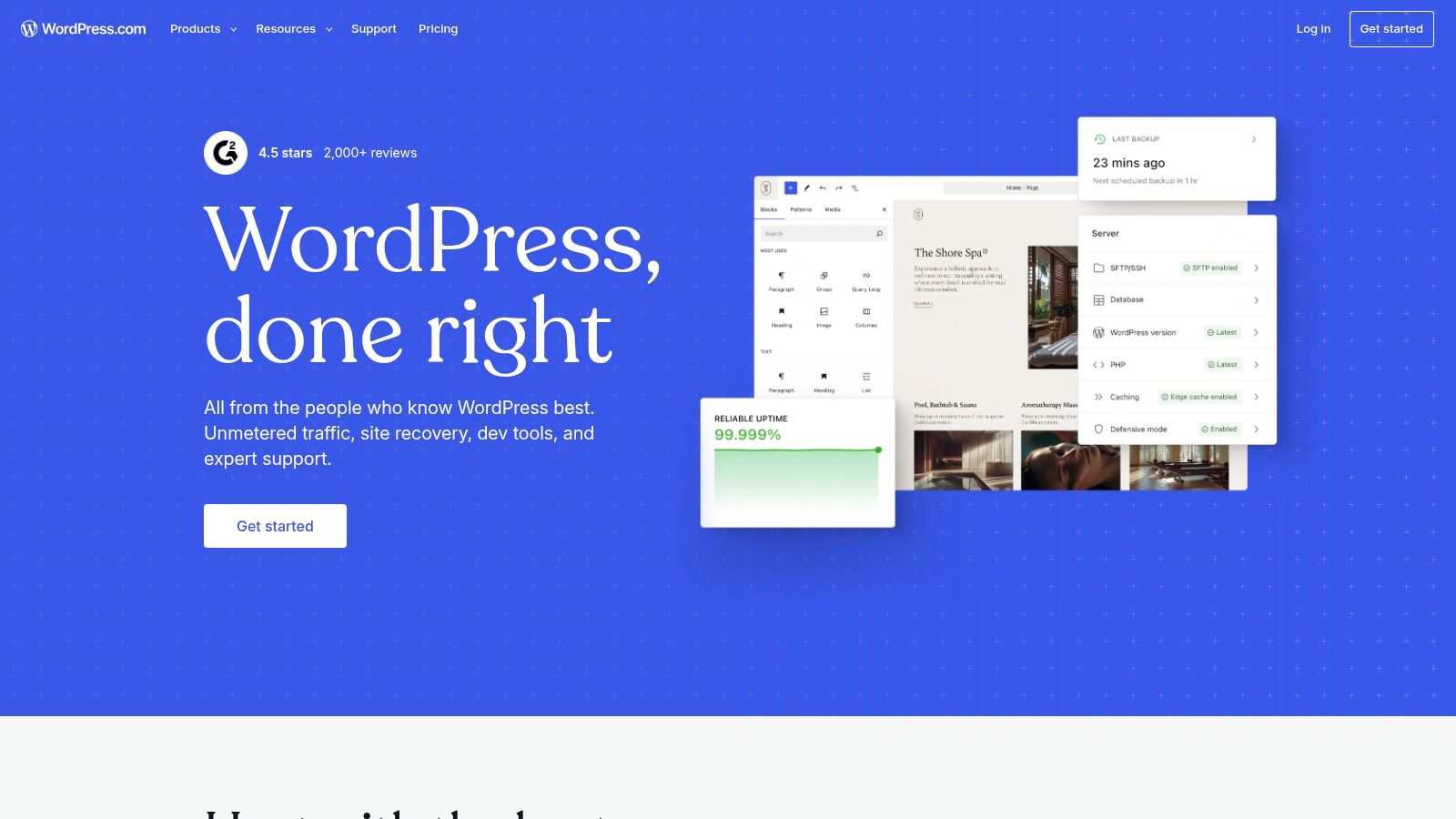
For musicians, the biggest practical benefit is theme variety. You can start with a layout designed for bands, labels, or artists, then adapt as your needs grow. If you later want broader content, memberships, or store functionality, the platform has room for that.
Why some musicians still choose WordPress
WordPress.com is a good fit for artists who think in terms of pages, posts, archives, and long-term content ownership. If you publish news, show recaps, press updates, release notes, or blog-style content, WordPress still handles that model well.
It also suits musicians who don't want to rebuild every time their needs change. A simple launch can grow into something more layered without moving platforms immediately. That flexibility is the draw.
A website for an active artist should be easy to expand. Discography, press, touring, and store content tend to grow faster than people expect.
Where WordPress.com can slow you down
The downside is decision fatigue. Themes, plan levels, plugin limitations, commerce support, and layout adjustments create more choices than a simpler builder.
That's manageable if you like tinkering. It's a problem if your real need is to publish a clean site this week. For many artists, WordPress is strongest when someone on the team is comfortable maintaining it. Otherwise, even a good setup can become stale because updates feel heavier than they should.
The best musician website examples on WordPress usually aren't the ones with the most features. They're the ones with a clear publishing rhythm and a simple structure.
7. Webflow
Webflow is where many visually ambitious artist sites end up when template constraints start to feel too tight. If brand expression is central to the project, Webflow offers a level of control that most drag-and-drop builders don't.
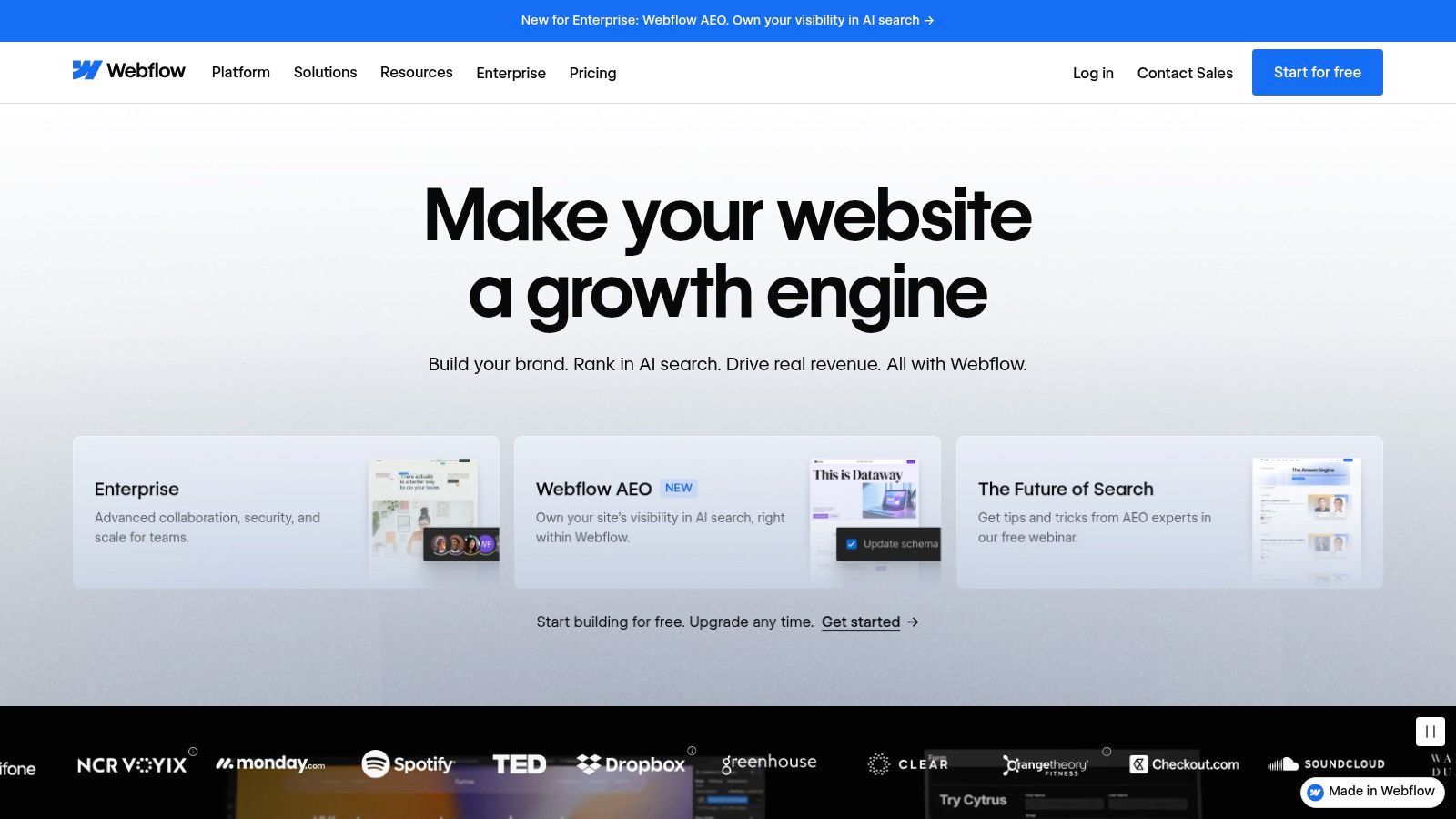
That control is useful for musicians with a defined visual language, frequent campaign pages, or content collections that need repeatable layouts for releases, videos, shows, or press.
Why Webflow stands out
Webflow's CMS is a key strategic feature. You can create collections for albums, tour dates, videos, and press mentions, then display them consistently across the site. For artists with active catalogs or teams managing updates, that's powerful.
It also gives designers more precision. If your site needs to feel less like a template and more like an art-directed experience, Webflow is one of the better options in this list.
Who should not start with Webflow
Webflow isn't the right first tool for every musician. If you need a simple page live tonight for your single release, it's probably more tool than you need. The learning curve is real, and the pricing structure can take a minute to understand.
For that reason, Webflow tends to work best for established artists, labels, design-conscious teams, or musicians working with a developer or designer. Used well, it can produce some of the strongest musician website examples online. Used casually, it can become an unfinished project.
7 Musician Website Platforms Compared
| Product | Implementation Complexity 🔄 | Resource Requirements ⚡ | Expected Outcomes ⭐📊 | Ideal Use Cases 💡 | Key Advantages |
|---|---|---|---|---|---|
| own.page - Musician-first Mini-Site | Low 🔄, drag‑and‑drop, mobile-first | Minimal ⚡, free subdomain; Pro for custom domains | ⭐⭐⭐⭐, quick, media‑centric fan hub with basic analytics 📊 | Link‑in‑bio, show announcements, merch pushes, mailing list growth | Media‑first embeds; mobile optimized; fast launch; built‑in analytics |
| Bandzoogle | Medium 🔄, template-driven music blocks | Moderate ⚡, subscription; built‑in, commission‑free store | ⭐⭐⭐⭐, professional artist sites with native store & EPK 📊 | Independent artists selling music/merch and building EPKs | End‑to‑end store + EPK; music blocks; artist examples gallery |
| Squarespace | Low–Medium 🔄, polished templates, simple editor | Moderate ⚡, paid plans; commerce features vary by tier | ⭐⭐⭐⭐, elegant branded sites with integrated marketing 📊 | Artists wanting designer templates, managed hosting and basic commerce | Designer templates; managed hosting; analytics and promo tools |
| Wix (Wix Music) | Low 🔄, drag‑and‑drop with music app | Low–Moderate ⚡, free with ads; premium for custom domain | ⭐⭐⭐, fast launches; commission‑free digital music sales 📊 | Artists wanting many templates and simple music sales | Large template gallery; Wix Music (no commission on digital); event integrations |
| Shopify | Medium 🔄, ecommerce setup and app configuration | Higher ⚡, subscription + apps & payment fees | ⭐⭐⭐⭐, scalable merch sales and optimized checkout 📊 | Artists prioritizing merch, vinyl, tickets and fulfillment at scale | Robust store management; app ecosystem for POD, tickets, bundles |
| WordPress.com (Hosted) with Music Themes | Medium–High 🔄, theme selection and plugin choices | Moderate ⚡, managed hosting; plugin/plan costs for ecommerce | ⭐⭐⭐⭐, flexible, extensible artist sites; requires upgrades for store 📊 | Artists who want WordPress flexibility without self‑hosting | Large theme catalog; audio blocks; WooCommerce support on plans |
| Webflow | High 🔄, visual designer with steeper learning curve | Moderate–High ⚡, paid site/workspace plans; design time investment | ⭐⭐⭐⭐⭐, pixel‑perfect, CMS‑driven sites for releases and press 📊 | Brands/artists needing bespoke design and CMS workflows | Granular design control; CMS for events/releases; professional showcases |
From Example to Execution Build Your Stage
The best musician website examples aren't just attractive. They make smart decisions about intent, flow, and maintenance. That's the difference between a site that looks impressive in a gallery and a site that helps you release music, sell merch, book shows, and grow a fanbase.
Start with the core question. What needs to happen when someone lands on your page? Maybe you need streams on a new single. Maybe you need to push ticket sales. Maybe you need a clean EPK and contact path for promoters. The right build depends on that answer, not on which platform has the flashiest screenshot.
A simple rule helps. If your audience mostly comes from mobile and social, a focused mini-site is often the smartest first move. If your business runs on merch, Shopify deserves serious attention. If design polish matters most, Squarespace and Webflow have clear strengths. If you want a musician-specific all-in-one setup, Bandzoogle stays compelling. If you want broader publishing flexibility, WordPress.com can make sense.
For most independent artists, though, the fastest route to a professional home base is still a compact, media-rich page that doesn't ask fans to work hard. own.page is especially strong there. You can embed your music, videos, social content, and calendars in one place, update from your phone, and keep the page aligned with what you're promoting right now. That's a practical advantage, not just a design preference.
The other lesson from strong musician website examples is that clarity wins. One strong hero block beats a cluttered homepage. One visible ticket button beats a buried event tab. One clean path to your latest track beats ten equal-priority links.
If you need inspiration beyond artist websites themselves, it also helps to study how live-event pages guide people toward action. This guide to secure tickets for live events is a useful reminder that conversion-focused pages don't need to be complicated. They need to be direct.
Build the page your music needs. Then keep it current. A smaller site that's active will outperform a bigger site that's abandoned almost every time.
If you're ready to stop sending fans to scattered links, build your home base on own.page. Start with a free page, embed your Spotify, YouTube, TikTok, Instagram, and calendar, then upgrade when you need a custom domain, multi-page site, and deeper analytics.
Free tools · no sign-up