What Does Heart Mean on Snapchat? Emojis Explained 2026
 Elitza Vasileva

On Snapchat, the heart emojis show your Best Friends status with another person. The Yellow Heart (💛) means you're each other's #1 Best Friend, the Red Heart (❤️) means you've kept that spot for two weeks straight, and the Pink Hearts (💕) mean you've held it for two months.
If you're here, there's a good chance you just noticed a heart next to someone's name and immediately had questions. Is Snapchat trying to tell you something emotional? Did that person choose it? Why did it change. Or worse, why did it vanish overnight?
The short version is comforting. Snapchat assigns these hearts automatically. They're not private love notes, and they're not random either. They're more like a little scoreboard badge based on who you interact with most.
A lot of guides stop at the definitions. That's where people get stuck. Most confusion comes from the moving parts, not the labels. People want to know why a yellow heart turned red, why a red heart disappeared, what the smiling face means, and whether a “gold heart” is even the same thing. That's the part worth understanding.
Table of Contents
- Decoding the Snapchat Hearts You See
- The Complete Guide to Snapchat Heart Emoji Meanings
- How Snapchat's Best Friends Algorithm Works
- Common Problems Why Did My Snapchat Heart Disappear
- Using Snapchat Hearts to Understand Engagement
- The Real Meaning Behind the Hearts
Decoding the Snapchat Hearts You See
You open Snapchat, glance at your chat list, and there it is. A heart next to one person's name. That tiny symbol can feel weirdly loaded, especially if you're not sure whether it reflects friendship, flirting, or some hidden app setting.

The key thing to know is simple. Snapchat hearts are app-generated friendship badges. They come from Snapchat's Best Friends system, not from anything the other person manually picked. That's why the answer to “what does heart mean on Snapchat” is less about romance and more about interaction patterns.
What the heart is actually measuring
Snapchat uses these hearts to mark a ranking. If two people snap and chat each other more than anyone else, Snapchat may show a heart to reflect that status. The color tells you how long that top ranking has lasted.
Practical rule: Don't read a Snapchat heart like a handwritten message. Read it like an automatic status badge.
That difference matters because people often attach emotional meaning to something that's really based on activity. If you use Snapchat casually, it can feel personal. If you use it constantly, it can look more like metadata, similar to how platforms track signals behind the scenes in tools like social media metadata.
Why people get tripped up
The existence of the heart isn't the primary source of confusion; rather, its behavior is. Why this person. Why today. Why did it change after one quiet stretch. Why is there a smiley face with one friend but a heart with another.
Those are good questions, because Snapchat's system is dynamic. It updates based on what you do, not what you mean.
The Complete Guide to Snapchat Heart Emoji Meanings
Open Snapchat after a busy week, and the emoji beside one friend suddenly changes from a smile to a yellow heart. A little later, it turns red. Then one day it disappears. That jumpy behavior is why these emojis confuse people. The heart system is less like a love note and more like a streak badge for mutual ranking.
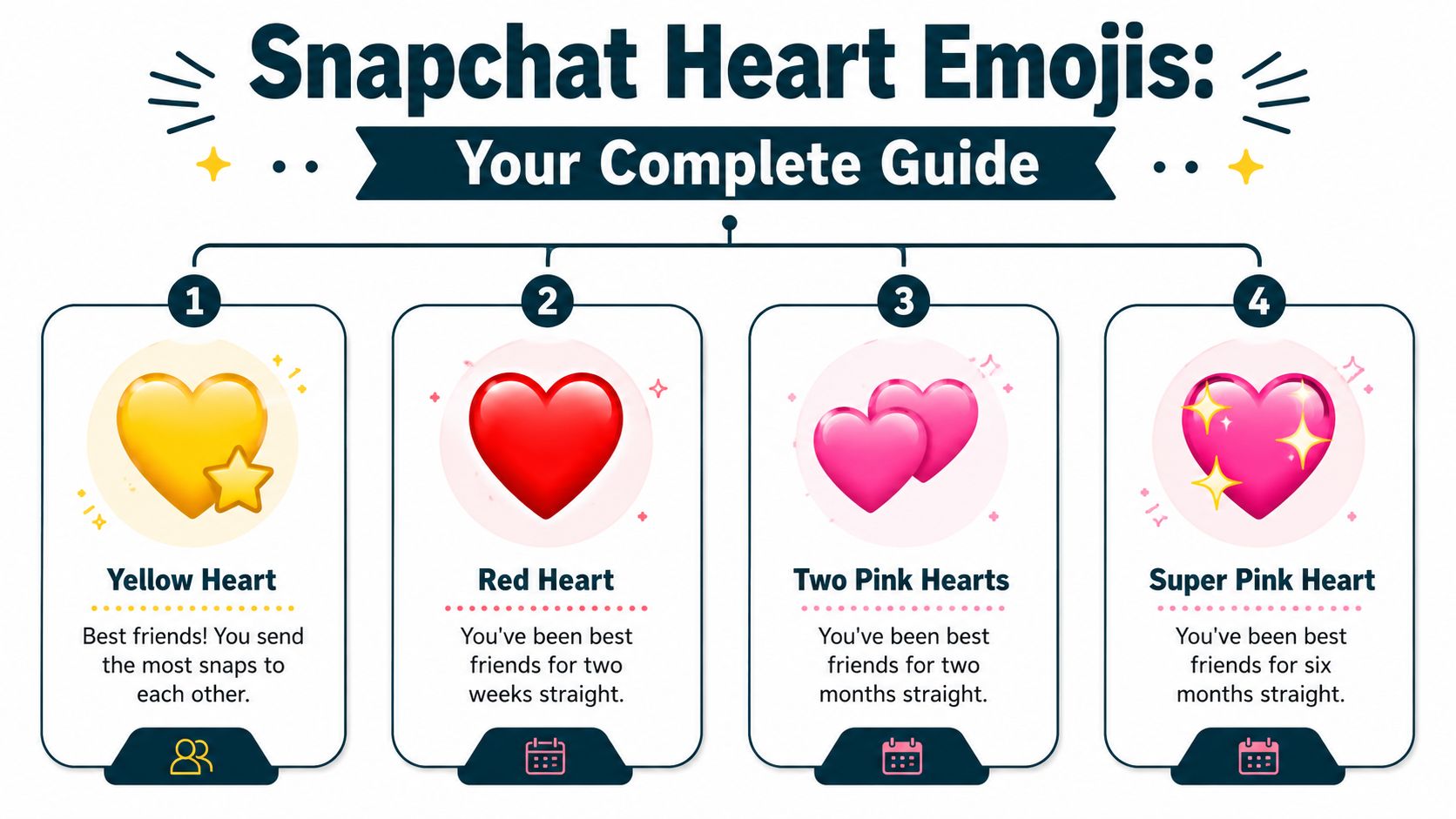
The easiest way to read Snapchat hearts is to see them as levels. Snapchat assigns them automatically as two people keep holding the same top spot with each other. The color shows how long that mutual pattern has lasted.
Yellow Heart means mutual number one
The Yellow Heart (💛) appears when you and another person are each other's top Best Friend in Snapchat's system, as described in this Snapchat heart timing explainer.
In simple terms, you interact with them more than anyone else, and they do the same with you.
That mutual part is what trips people up. You can send one person lots of snaps and still not get a yellow heart if they are more active with someone else.
Red Heart means the pattern stayed steady
The Red Heart (❤️) means the yellow-heart relationship kept its mutual #1 position for two straight weeks.
So the red heart is less about intensity and more about consistency. A yellow heart says, "you are each other's top person right now." A red heart says, "that stayed true day after day."
Pink Hearts mean long-running mutual top status
The Pink Hearts (💕) show that the same mutual #1 Best Friend position held for a much longer stretch.
This is the highest heart tier commonly discussed on Snapchat. It signals a stable habit, not just a short burst of replying back and forth.
The emojis people mix up with hearts
A lot of confusion starts because Snapchat has several friendship emojis, and they do not all mean the same thing.
- Smiling Face (😊) usually means you are one of their Best Friends, but not necessarily their top one, and not necessarily in a fully mutual #1 spot.
- Smirking Face (😏) often points to a one-sided bestie situation. You are one of their best friends, but they are not ranked the same way for you.
- Yellow Heart (💛) is the first mutual top-ranking heart.
- Red Heart (❤️) and Pink Hearts (💕) are the same mutual top-ranking relationship after it lasts longer.
That one-sided part matters. A smile or smirk can make people assume, "we have the same status," when Snapchat may be showing two very different rankings behind the scenes.
Emoji meaning also changes from app to app, which is why broader guides like emojis for better YouTube titles are useful. The symbol stays the same. The platform rules change.
| Emoji | What it signals on Snapchat |
|---|---|
| 💛 | You're each other's #1 Best Friend |
| ❤️ | You kept that mutual #1 spot long enough to move up from yellow |
| 💕 | You kept that mutual #1 spot for an extended period |
| 😊 | You're close in Snapchat's ranking, but not in a heart tier |
| 😏 | A one-sided best-friend dynamic may be happening |
How Snapchat's Best Friends Algorithm Works
Snapchat's heart system runs on ranking, not sentiment. The app keeps track of who you exchange the most snaps and chats with over time, then orders those relationships in the background. If you want a more technical look at how platforms structure social features, a Snapchat API guide gives helpful context.
The key idea is simple. A heart is not about whether one person snaps a lot. It is about whether both people sit in the top spot for each other at the same time.
That is why the system can feel confusing at first.
You can send one person constant snaps and still see no heart. From your side, they may clearly be your number one. From Snapchat's side, they also have to send the most to you, compared with everyone else they message. If they interact more with someone else, the heart does not appear, even if your chat with them feels active.
A good way to picture it is a two-person ranking match. Your activity counts, and their activity counts, but the badge shows up only when both rankings line up. That is also why the smiling face and smirking face confuse so many people. Those emojis can signal closeness or a one-sided best-friend pattern, while a heart means the relationship is fully mutual at the top.
Duration matters too. Snapchat does not assign every heart at once. The Yellow Heart comes first when you both reach that shared number one spot. If you hold it long enough, it changes to red, then later to pink hearts. The color change is less like earning separate trophies and more like watching the same status mature over time.
One more detail helps clear up a lot of confusion. Snapchat shows the highest friendship badge that fits your current status, not a stack of every badge you have ever earned. If you have ever wondered why social apps keep old signals in one place but make live signals change quickly, features like archiving photos on Instagram show the opposite approach. Archive tools preserve history. Snapchat friendship emojis reflect current interaction patterns.
So if a heart appears, changes color, or never shows up in the first place, the reason usually comes back to the same mechanic. Snapchat is constantly reordering who feels most active, most mutual, and most consistent right now.
Common Problems Why Did My Snapchat Heart Disappear
Losing a heart feels dramatic, even when you know it's algorithmic. One day it's there. The next day it's gone, and your brain starts writing stories.
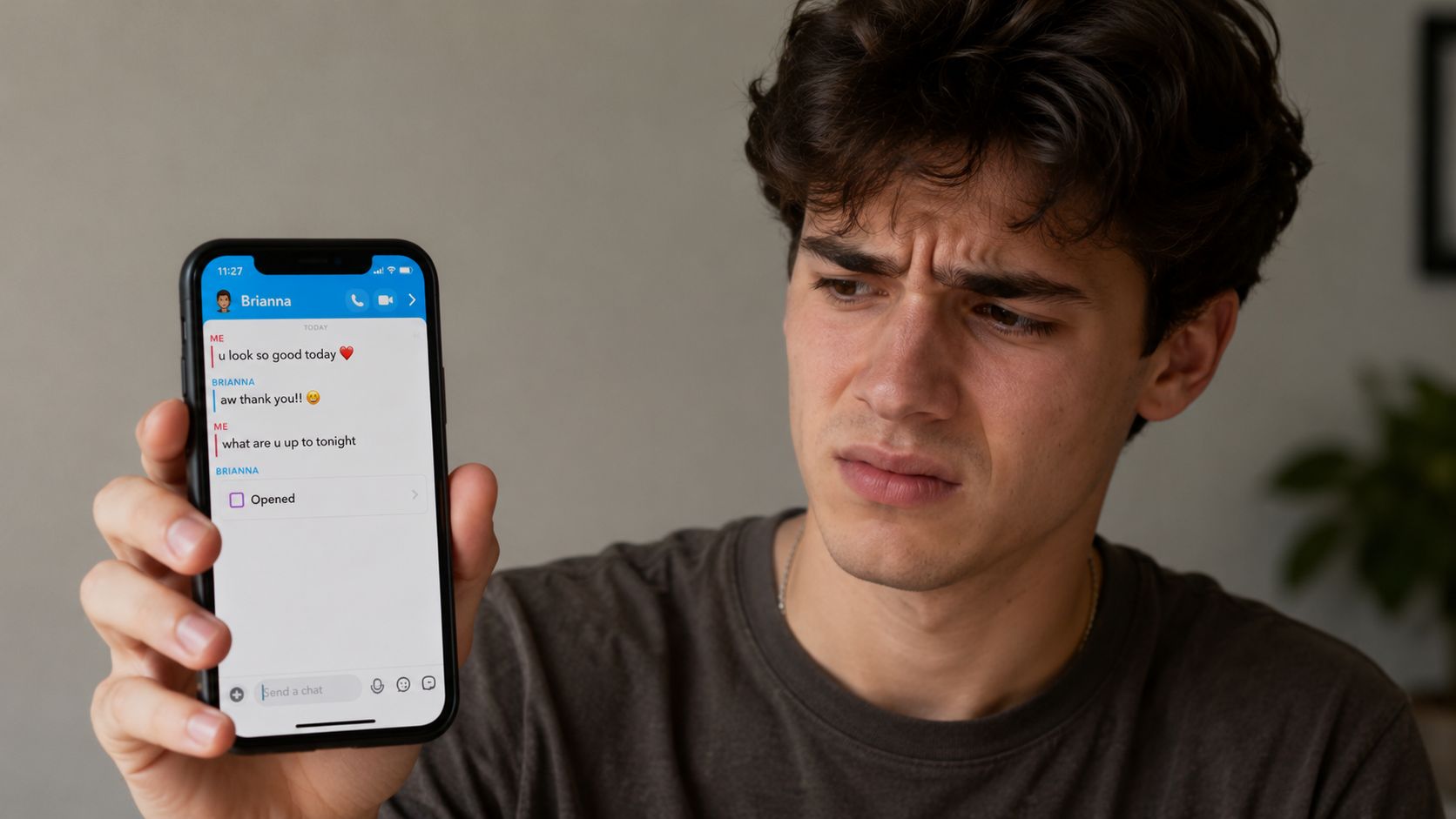
The boring answer is usually the right one. Your interaction pattern changed, or someone else moved ahead in the ranking.
Why a heart can disappear fast
A major content gap around Snapchat hearts is the so-called breakup mechanic. Verified reporting notes a 40% spike in Q1 2026 searches about “lost hearts” and “streak resets”, showing how often people run into this confusion, according to Newsweek's overview of Snapchat emoji confusion.
What that tells you is not that hearts are broken, but that they're volatile. They depend on ongoing ranking, not sentimental history.
If your red heart disappears, the most likely reason is simple. You no longer held that mutual top spot continuously. Maybe you were less active. Maybe they snapped someone else more. Maybe your chat volume shifted just enough for the ranking to change.
Because the verified data highlights confusion around reset thresholds, it's better to stay honest here: Snapchat's exact public reset behavior after a break in heart status isn't fully clarified in the provided data. So if you're asking whether a lost red heart reverts instantly to yellow or disappears entirely, the safest answer is that the visible badge changes when the underlying mutual ranking changes.
Yellow Heart versus Gold Heart
This one gets people all the time. The Yellow Heart means mutual #1 Best Friend status. The so-called Gold Heart confusion comes from people mixing that up with a different yellow or gold-looking symbol, especially the replay-related icon mentioned in the verified data.
So if someone says “gold heart,” slow down and check what they saw. They may mean the yellow best-friend heart, or they may be talking about a completely different Snapchat symbol.
Here's a quick visual reminder from the platform explanation covered earlier:
If you tend to save and review disappearing social content features across apps, tools like an Instagram archive photos guide can help build that same habit of checking what an icon means before assuming the emotional version.
The one sided bestie confusion
This is the underrated part. Sometimes you feel close to someone on Snapchat, but the app doesn't show a heart.
That usually points to a one-sided bestie situation. The verified data calls out this blind spot directly. People often miss that heart badges are about mutual top ranking, while a Smiling Face (😊) can reflect a close-friend state that doesn't carry the same mutual #1 meaning.
So if you see a smiley instead of a heart, don't panic. It doesn't mean something is wrong. It usually means the connection is active, just not perfectly mirrored at the top.
Using Snapchat Hearts to Understand Engagement
If you're a creator, freelancer, or small business owner, Snapchat hearts can be useful beyond friend drama. They can act like lightweight engagement signals.
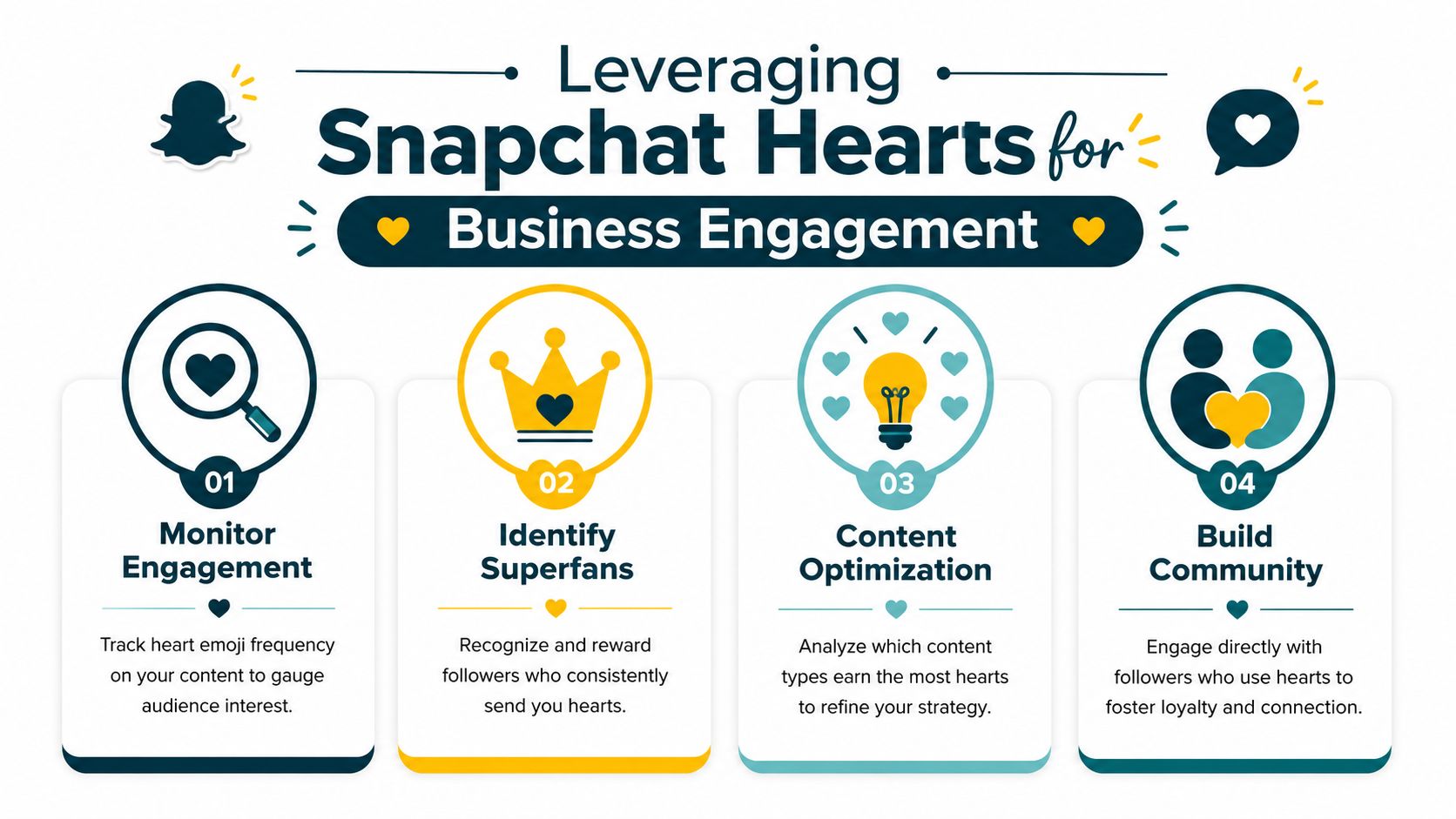
What creators and freelancers can learn from them
A heart can tell you that one relationship is especially active right now. If you're a creator, that may point to a highly engaged fan. If you're a freelancer, it might signal a client you message constantly. If you manage outreach, it can mean one conversation is dominating your Snapchat activity.
That makes the heart less like a compliment and more like a clue.
- Spot active connections: A new yellow heart can suggest that one person has become your most consistent back-and-forth contact.
- Notice sustained interaction: Red and pink hearts usually suggest the pattern has held, not just spiked for a day.
- Use context: A heart with a collaborator means something different from a heart with your best friend from school.
For people building a public presence, reading app signals correctly matters. A broader guide on how to build an online presence can help you think about platform signals as patterns, not just feelings.
Don't treat Snapchat hearts as a relationship verdict. Treat them as feedback about communication intensity.
What not to assume
This matters even more for professionals. The verified data points out that creators and freelancers who message many people can misread a red heart as proof of personal closeness when it may reflect high-volume business communication.
That's why context wins every time.
A heart can mean loyalty. It can also mean logistics. If you and a client are swapping messages all day about edits, deadlines, or approvals, Snapchat may rank that as top-tier engagement. The app doesn't know whether the conversation is emotional, practical, or both.
The Real Meaning Behind the Hearts
So, what does heart mean on Snapchat?
It means Snapchat has tagged a relationship as a top Best Friends connection based on sustained, mutual activity. Not romance by default. Not a manual label. Not a secret message hidden inside the app.
The important shift is this: hearts are dynamic badges. They can appear, change color, or disappear because your messaging pattern changed. That makes them useful, but also easy to overread if you don't understand the system behind them.
If you remember only three things, make them these:
- Yellow Heart means you're each other's top Snapchat contact right now.
- Red Heart means that top spot held steady for a while.
- Pink Hearts mean it stayed consistent even longer.
And if there's no heart, that doesn't automatically mean distance or drama. Sometimes it just means the ranking isn't mutual, or another conversation temporarily took the lead.
Once you stop treating Snapchat hearts like emotional mysteries, they become much easier to read. They're just little algorithmic badges attached to real human habits.
If you're a creator, freelancer, or small business owner who wants one clean place for all your links, content, and updates, own.page makes that easy. You can build a mobile-friendly homepage or link-in-bio site in minutes, keep your branding consistent, and update everything from your phone or browser without code.
Free tools · no sign-up